
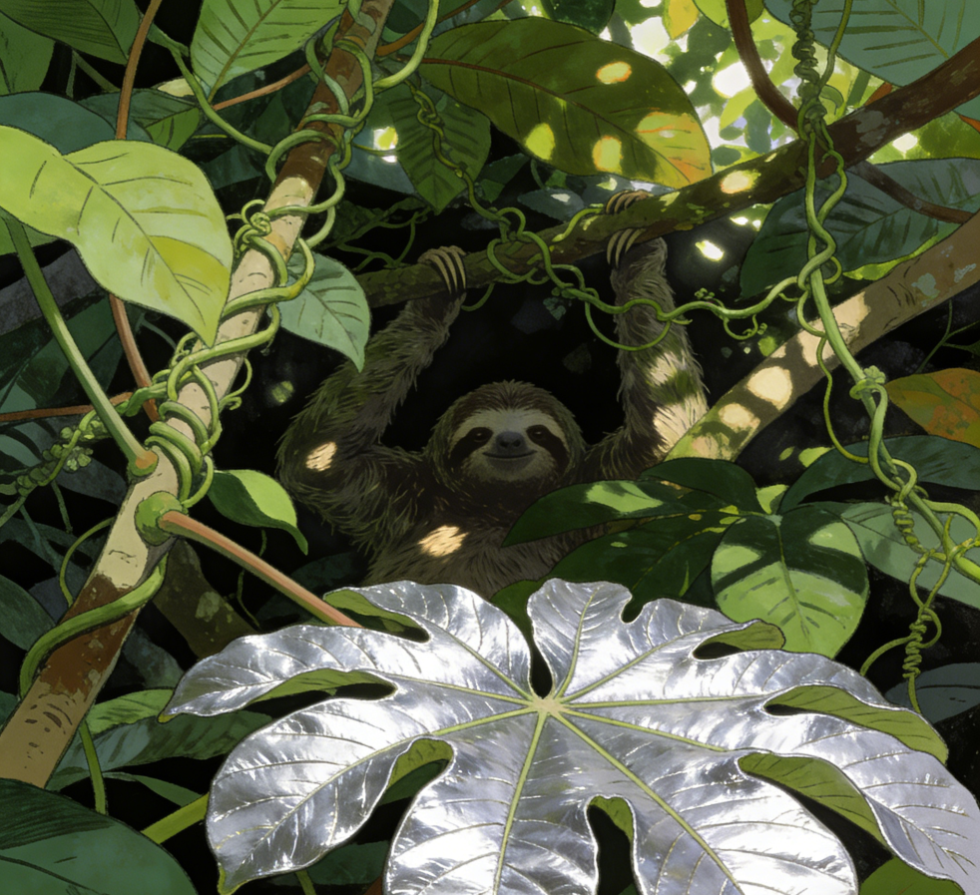
You’ve seen the photos—a blissful sloth smiling serenely from a rainforest canopy, the epitome of “Pura Vida.” Now, you’re headed to Costa Rica’s Manuel Antonio National Park, hoping for your own magical encounter. The reality? Spotting these iconic creatures on your own is a challenge worthy of a rainforest detective. They are the masters of stillness and camouflage, their algae-tinted fur blending seamlessly with the sun-dappled leaves. But with the right strategy, your hike can transform from a hopeful glance upward into a series of unforgettable wildlife moments. Here is your essential, practical guide to making it happen.
The Unbeatable Advantage: Invest in a Certified Naturalist Guide
This is the single most impactful decision you can make. A certified guide is not a luxury; it’s your key to unlocking the park’s hidden layers. Think of them as expert translators of the forest, turning a green blur into a vivid story.
Trained Perception: Guides possess a “search image” honed by thousands of hours. They don’t just look at trees; they analyze them for the specific silhouette of a sloth balled up in a fork, the telltale scratch marks on bark, or the preferred branches of the Cecropia tree (the “sloth supermarket”). They look for texture and shape that the untrained eye dismisses as a knot of wood.
Essential Technology: Every professional guide carries a high-powered spotting scope on a tripod. This is a game-changer. It brings a distant, grey blob into crisp, intimate focus, allowing you to count the claws, see the distinctive facial markings that differentiate a Two-toed from a Three-toed sloth, and witness the gentle grip of a baby. Furthermore, they can expertly align your smartphone camera with the eyepiece, enabling you to capture stunning, detailed photos you’d otherwise never get.
The Jungle Network: Guides operate a real-time communication web. A sighting of a rare animal, like a sloth on the move or a nursing mother, is quickly shared via radio or messaging. This collaborative intelligence dramatically increases your chances of seeing not just any sloth, but one engaged in interesting behavior.
If You Go Solo: Sharpening Your Own Skills
While a guide is highly recommended, you can improve your own odds significantly with these techniques:
Timing is Everything: Sloths are most active during brief windows in the early morning (6am-8am) and late afternoon (3pm-5pm). This is when they might slowly change position or feed, making movement—however slight—your best visual cue.
Look for the Clues, Not the Animal: Train yourself to scan for irregularities.
Look for “Moss Balls”: A sloth at rest often resembles a large, fuzzy clump of moss or a termite nest in a tree fork.
Follow the Gaze: If you see a group of people or another guide stopped, looking intently with binoculars, join them politely and look where they look.
Check the Cecropias: Learn to identify the Cecropia tree (large, hand-shaped leaves with silvery undersides). Pause and scrutinize these trees methodically.
Patience is Your Lens: Stop frequently. Stand quietly for 5-10 minutes in a promising area. Scan the mid-canopy slowly. Often, your eyes will adjust, and a shape will resolve from the foliage.
Choosing Your Guide & Park Logistics
Book in Advance: Reputable guides are often booked ahead, especially in high season. Secure one online or through your hotel before you arrive at the park gates.
Official vs. Independent: You can hire an official park guide at the entrance, or book a certified independent guide in advance. Both are excellent. Independents often offer more personalized, smaller group tours.
Park Practicalities: Remember the park is closed on Tuesdays. Purchase your entry ticket online in advance on the SINAC website to guarantee access, as daily visitor numbers are capped. Bring water, rain gear, binoculars if you have them, and wear sturdy, non-flashy clothing.
By combining expert guidance with informed preparation, you shift from passive hoping to active discovery. You’ll leave with more than a checked box; you’ll carry a deeper appreciation for the quiet wonders hidden within the green heart of the rainforest.







Discuss