
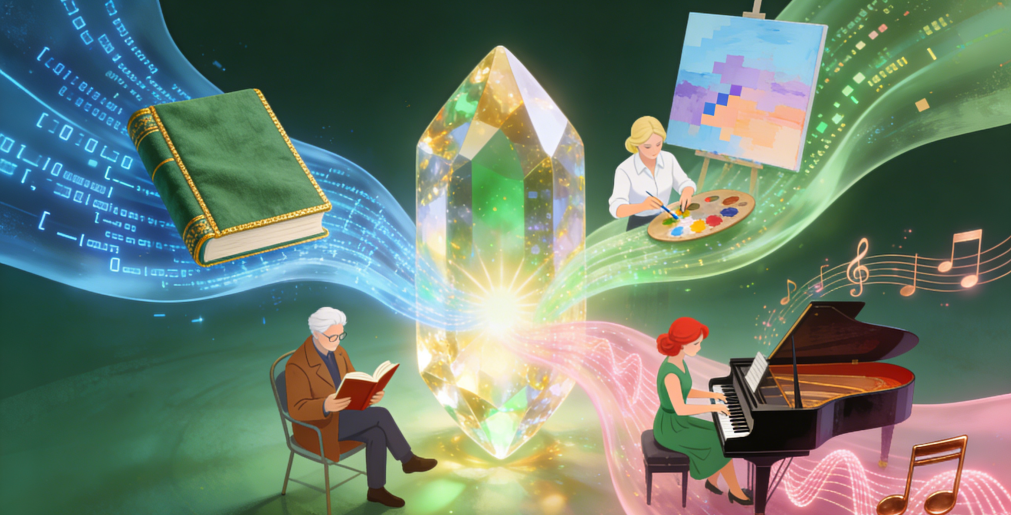
For the last year, the conversation has orbited one thing: the text box. We’ve been amazed by eloquent essays, troubled by plausible lies, and tasked with prompting a chatbot just right. But ask any human how we understand the world, and text is just a sliver of the story. We live in a rich, messy, multi-sensory reality of images, sounds, textures, and contexts. The next seismic shift in AI isn’t about getting better at words—it’s about shattering the single-modal cage.
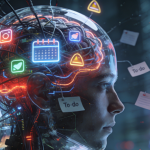
Welcome to the era of Multimodal Foundational Models. This mouthful of a term describes a new class of AI that doesn’t just process one type of data (like text with GPT-4), but seamlessly integrates and understands the relationships between text, images, audio, and eventually, video and 3D space. It’s not just a chatbot with a vision plug-in. It’s a unified system trained from the ground up to see a meme, get the joke, explain why it’s funny, and then generate a new one in a different style. This isn’t an incremental upgrade; it’s a fundamental rewiring of how AI perceives and interacts with our world.
Think of previous AI as a team of brilliant, isolated specialists: one genius for captions, another for graphic design, a third for composing jingles. Multimodal AI is the ultimate cross-disciplinary polymath. It’s the creative director who can storyboard a concept, write the script, suggest a visual tone, and storyboard a concept, write the script, suggest a visual tone, and pick the soundtrack—all within a single, coherent understanding of the goal. Systems like Google’s Gemini or OpenAI’s GPT-4V are early ambassadors of this shift, moving us from single-tool assistants to holistic creative partners.
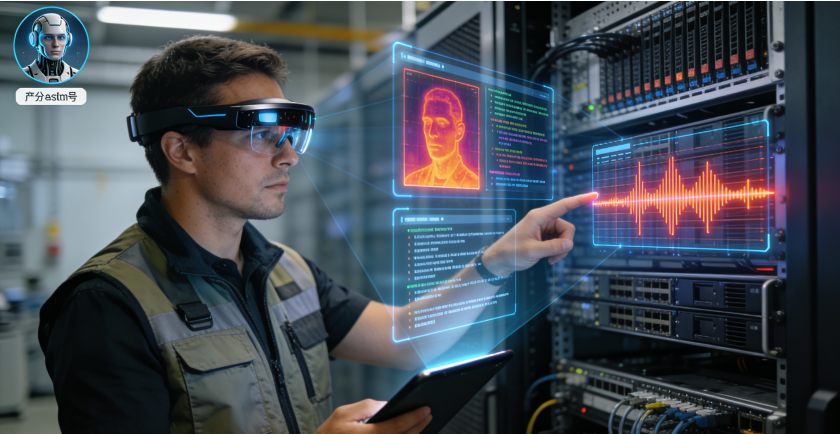
For creators, this changes the game from production to direction. The grueling, technical lift of translating a vision into different formats starts to melt away.
- The Writer’s Block Buster: Stuck on a scene for your novel? Describe it (“a cyberpunk market at dusk, neon reflections on wet pavement”) and ask the model for a descriptive paragraph, a mood board of images, and even a snippet of ambient sound design to get you in the headspace.
- The Universal Translator for Ideas: Sketch a rough storyboard on a napkin, upload it, and ask for a shot list, a production budget breakdown, and social media teasers. The model understands the visual intent and extrapolates.
- The End of the Blank Canvas: Instead of starting with a blank doc or an empty canvas, you start with a conversation. “I need a cheerful logo for a sustainable honey startup, with a modern feel and a bee motif that isn’t cheesy. The brand voice is witty and expert.” What you get back isn’t just a list of fonts; it’s a set of visual concepts, tagline options, and a brand guide—all generated in context of each other.
The impact ripples far beyond the creative studio into the core of industry service. Expertise is being democratized through intuitive, multimodal interfaces.
- Diagnostics, Augmented: A field technician can point their phone at a malfunctioning industrial machine. The AI cross-references the live video feed with the machine’s manual, service history (text), and the anomalous sound it’s making (audio) to suggest the three most likely failed components and guide the repair in real-time via AR overlay.
- Personalized Everything, At Scale: Imagine an educational platform where a student struggling with a physics concept can snap a photo of their textbook diagram. The AI generates a custom, 3D interactive simulation of the principle, explains it in a friendly, tailored narrative (text), and quizzes them verbally (audio). The lesson adapts to the student’s primary learning modality on the fly.
- Synthesis as a Superpower: Analysts can now feed a model quarterly reports (text), presentation charts (images), and earnings call recordings (audio). The request isn’t just “summarize,” but “Identify the two key strategic pivots the CEO is hinting at, find any disconnect between the spoken priorities and the chart data, and visualize a new graph that better represents their stated goal.”
Of course, this power comes with profound questions. The risk of hyper-realistic misinformation (deepfakes with coherent, generated narratives) escalates. “Hallucinations” could become full sensory experiences. The line between human and AI-generated content will blur beyond recognition, forcing a crisis of provenance and trust. Furthermore, the energy and data required to train these behemoths raise serious ethical and environmental concerns.
We are moving from an age of generative AI—which makes things—to an age of comprehension AI—which understands things, in all their messy, multimodal glory. The next stop isn’t a better chatbot. It’s a foundational shift towards a true, contextual understanding of our world. The text box was just the training wheels. Now, AI is learning to navigate the real world alongside us, and it’s about to change not just what we create, but how we think, solve problems, and share knowledge. The interface of the future isn’t a prompt; it’s a conversation using every medium we have.




Discuss