
A curious dissonance defines the current technological moment. In earnings calls and corporate press releases, a triumphant narrative reigns: artificial intelligence is a transformative force, already driving unprecedented efficiencies, fattening profit margins, and creating new vistas of value. Yet, in the sober ledgers of national economic accounts, a different story is being told. Broad productivity growth—the fundamental engine of rising living standards—remains stubbornly sluggish, trapped in the same anemic pattern that has defined the last decade. This is the AI Efficiency Paradox: a glaring gap between microeconomic optimism and macroeconomic stagnation. Its existence is not a denial of AI’s power, but a critical lens through which to understand how technological potential is translated, measured, and ultimately captured in our modern economy. The paradox forces us to question not whether AI works, but what “working” means, for whom it works, and at what cost.
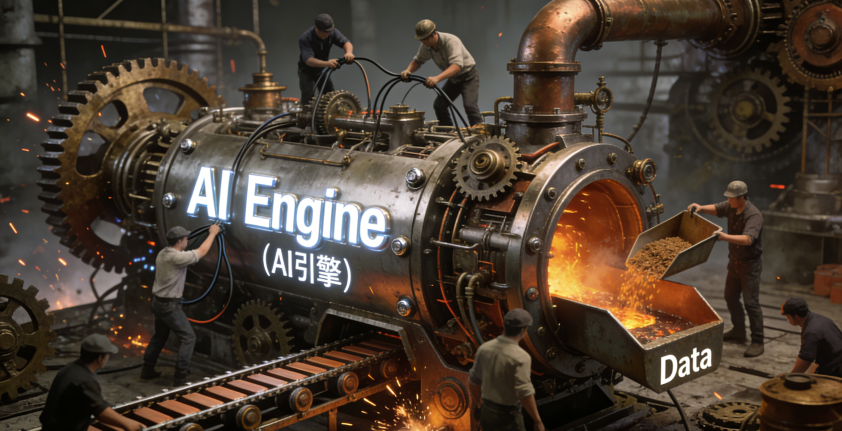
The initial explanation for this disconnect lies in the profound failure of measurement. Traditional productivity metrics, like output per hour worked, are artifacts of an industrial age. They excel at counting widgets produced but are nearly blind to the qualitative enhancements and complex value creation that define AI’s impact. How does one quantify an AI that improves a lawyer’s brief, a marketer’s targeting, or a radiologist’s diagnostic accuracy? These gains in quality, speed, and customization often evade capture in GDP statistics. More importantly, the true “product” of this AI investment phase is not immediate output, but intangible capital: newly trained models, reconfigured workflows, and accumulated data assets. A company spending billions to build a proprietary AI infrastructure is making a capital investment, not an immediate consumption. In national accounting, this outlay often appears as a cost that depresses current-period productivity, while its future benefits remain speculative and uncounted. We are, in essence, trying to measure the construction of a new cognitive factory with tools designed to audit an assembly line.
Beyond measurement lies the more turbulent reality of transition friction and skill reallocation. The implementation of general-purpose technologies has historically followed a “J-curve,” where an initial phase of disruption and cost outweighs the later gains. AI is no exception. The current phase is characterized not by seamless augmentation, but by costly and chaotic integration. Vast resources are being diverted into pilot projects, consultant fees, and the recruitment of a tiny, hyper-expensive cadre of AI specialists. For every employee made more efficient, another may be engaged in the exhausting work of prompt engineering, output validation, or managing the fallout from AI hallucinations. This widespread skill mismatch creates a drag. The labor market is bifurcating into a minority who can harness the new tools and a majority who are either displaced or burdened with overseeing them. The productivity gains from the former are being offset, for now, by the adjustment costs borne by the latter. The promised land of leaner operations is preceded by a costly and inefficient pilgrimage.

The most contentious dimension of the paradox, however, is distribution and the nature of profit. Even where AI demonstrably boosts efficiency, the resulting economic gains are not necessarily flowing in ways that show up as broad productivity growth. Instead, they are often captured in forms that accentuate inequality and market concentration. First, AI is a potent tool for rent-seeking and market power. Algorithms optimize for dynamic pricing, personalized persuasion, and regulatory arbitrage, allowing firms to extract more value from existing markets rather than creating new, more productive ones. This boosts corporate profits without increasing societal output—it simply reshuffles who gets paid.
Second, AI-driven efficiency frequently manifests as labor displacement and task automation in service and administrative functions, rather than the enhancement of goods production. A chatbot may handle a million customer queries with minimal marginal cost, a clear efficiency for the firm. But if those displaced service jobs are replaced by lower-wage gig work or simply eliminated, the net effect on aggregate wages and consumption—key inputs into a healthy, growing economy—can be negative. Profits soar because costs (like labor) are cut, not because the economic pie is growing robustly.
Third, there is a growing divergence between financial engineering and productive investment. Soaring stock market valuations for AI-centric companies are based on future profit expectations, which incentivize cost-cutting and share buybacks in the present. This financialization directs capital away from the kind of broad-based capital expenditure (new factories, worker training, foundational R&D) that traditionally fueled productivity booms. The AI boom is, in part, a financial phenomenon that rewards ownership of the technology itself, not its widespread, productive application.
The resolution of the AI Efficiency Paradox will determine the shape of our economic future. If the current path continues, we risk a “winner-takes-most” productivity dynamic, where a handful of firms and highly-skilled workers capture nearly all the gains, while the broader economy stagnates beneath a facade of technological sophistication. The alternative path requires a concerted shift in focus from cost extraction to capacity expansion. This means investing not just in the AI models, but in the complementary human capital to wield them creatively; not just in automating tasks, but in augmenting professions to solve more complex problems; not just in private profit, but in public data infrastructure and research to ensure the benefits of the intelligence revolution are diffused.
The paradox, therefore, serves as a crucial corrective to Silicon Valley’s triumphalism. It reminds us that technology alone does not guarantee progress. Productivity is a social construct as much as a technical one, dependent on institutions, skills, and a fair distribution of rewards. The fact that AI is making companies richer faster than it is making the economy smarter is not an inevitable outcome of the technology, but a telling indictment of our current economic priorities. Until we learn to channel its power toward genuine value creation for the many, rather than value extraction for the few, the dazzling promise of AI will remain just that—a promise, shimmering on corporate balance sheets, yet to materialize in the lived reality of our collective economic life.







Discuss