
Let’s rewind to a not-so-distant past. The car was a mechanical marvel, a symphony of pistons and gears. Its value was measured in horsepower, its soul was the engine’s roar, and its national identity was set in stone: German for engineering, Italian for passion, American for muscle, Japanese for reliability. The global order was stable, predictable.
Then came the electric shock. And as we stand in 2026, the tremor has become a full-scale tectonic shift. A new epicenter has emerged, not in Detroit or Wolfsburg, but decisively, in China. The leaderboard has been rewritten: a Chinese company now tops the global pure EV sales chart, and two have muscled their way into the top four by market valuation. This isn’t just a sales victory; it’s a fundamental power transfer in technological and industrial leadership.
The game has changed, and the rules are being rewritten by a new playbook. Here’s what the great automotive reboot looks like.
The Core is Now Digital: From Engine Bay to Neural Hub
For a century, the beating heart of a car was under the hood. Today, its most vital organ is a silicon brain. The competition has evolved from the physics of torque to the poetry of algorithms and artificial intelligence.
Cars are no longer “dumb” machines. They are becoming sentient partners on wheels. The modern vehicle is a rolling data center, ingesting terabytes of information from its surroundings through a suite of sensors. Its central nervous system—powered by immense onboard computing power—processes this in real-time, enabling it to predict, adapt, and even make decisions. The driver is transitioning from an operator to a supervisor, supported by an AI co-pilot that handles the monotonous and masters the complex. Inside, the cabin transforms into a context-aware living space. Conversational AI understands nuanced commands and intent, turning the vehicle into a personalized digital butler that manages your schedule, climate, and entertainment seamlessly.
This shift redefines a company’s most critical asset. The assembly line is no longer king; the new currency is “brainpower density.” The winners are those with the best software engineers, the richest reservoirs of real-world driving data, and the fastest iteration cycles for their machine-learning models. It’s no longer about how many cars you can stamp out, but how much unique, intelligent experience you can build into each one.
The Value Equation is Now a Marathon: From Sale to Service
The traditional business model—sell the metal, make a profit, wave goodbye—is crumbling. The relationship between maker and user is being stretched into a lifetime journey of value creation.
The vehicle itself is becoming a platform, a hardware base that gains value through continuous software updates. This ushers in the era of the “feature-on-demand” economy. Want an advanced driver-assist package for a cross-country trip? Subscribe for a month. Fancy a performance boost for a track day? Unlock it via an app. The car evolves and improves, creating an ongoing revenue stream that far outlasts the initial sale.
Simultaneously, the car is morphing into a productive economic asset. With bidirectional charging (V2G), your parked EV can power your home or sell electricity back to the grid, turning a cost center into a potential revenue generator. In the near future, your personal vehicle could even join a shared robotaxi fleet while you’re at work, earning its keep. The automotive industry is no longer just about manufacturing; it’s increasingly about mobility services and energy management.
The Solo Act is Dead: Welcome to the Ecosystem Wars
No single company, no matter how vast, can master the complexities of smart mobility, connected energy, and urban integration alone. The age of the solitary automaker is over. The new imperative is to build alliances and ecosystems.
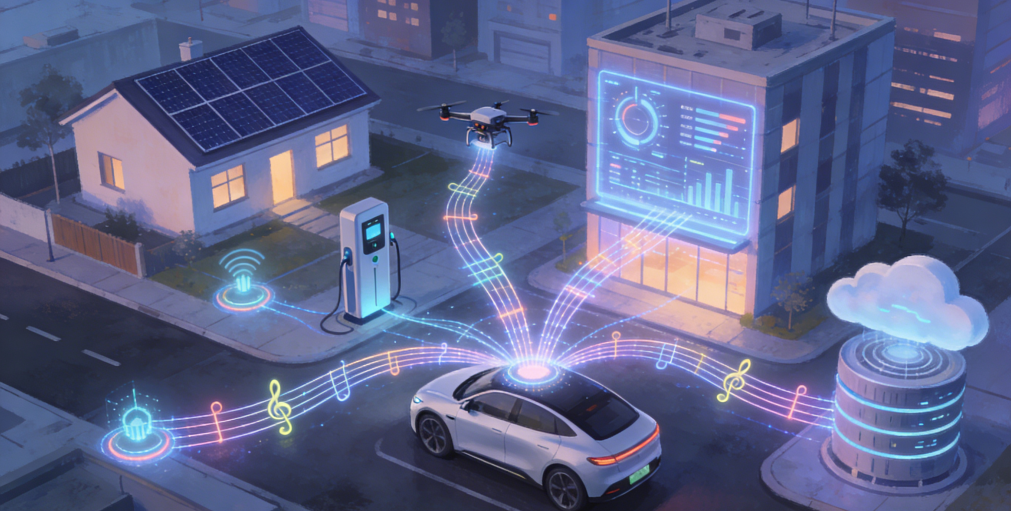
The car is the entry point, the key that unlocks a wider digital world. Leading players are now positioning themselves as architects of integrated systems that connect transportation, energy, communication, and commerce. Your car will talk to traffic lights to optimize flow, reserve and pay for parking autonomously, and sync perfectly with your smart-home devices. Success will be determined not by who builds the best standalone vehicle, but by who curates the most seamless, valuable, and open network of services and partners. The future battle is between ecosystems, not just brands.
The World’s Innovation Crucible: From “Made for China” to “Made by China, for the World”
This is perhaps the most profound change of all. China, long the world’s largest car market, has transformed into its most intense “innovation crucible.” A unique combination of hyper-competitive local brands, digitally-savvy and demanding consumers, and the world’s most complete and agile EV supply chain has created a pressure cooker for advancement.
The innovations forged here are no longer local curiosities. The ultra-fast charging standards, the revolutionary cell-to-body battery integration, the hyper-connected digital cockpit concepts—these are now setting the global benchmark. International giants have shifted their China strategy from simply localizing global models to establishing dedicated R&D centers to tap into this fertile ground. The flow of technology has reversed. China is no longer just following global trends; it is actively authoring the next chapters of the global automotive playbook.
The car of 2026 is a symbol of a larger transformation. It represents the convergence of energy, digital intelligence, and mobility into a single, dynamic force. The center of gravity for this revolution has moved, pulling the entire industry into a new orbit. The road ahead is being mapped not by where we’ve been, but by the relentless, collective intelligence of this new era.






Discuss