
We are living through a profound and painful paradox. Humanity has achieved a degree of hyper-connectivity once unimaginable, yet across continents, a quiet, pervasive epidemic is spreading. It is not marked by a virus, but by a hollow feeling; its symptom is not a fever, but a deep-seated sense of social disconnection. This is the loneliness epidemic, a condition now formally recognized as a critical public health threat by authorities from the United States to the United Kingdom. The diagnosis is clear: despite—and in many ways because of—our dazzling digital tools, we are becoming a lonelier species. To understand why, we must examine not just individual feelings, but the very architecture of our modern social world, an environment increasingly engineered to prioritize shallow contact over deep connection, performance over presence, and the curated self over the authentic other.
Loneliness, at its core, is the distressing gap between one’s desired and actual social relationships. It is a subjective, painful signal, much like hunger or thirst, that something essential for our wellbeing is missing. While often conflated with solitude, loneliness is not about being alone; it is about feeling fundamentally unseen, unheard, and unvalued within one’s social landscape. This feeling is now rampant. Reports from public health bodies paint a stark picture: significant portions of adults in industrialized nations report measurable loneliness, with severe implications not just for mental but for physical health. This crisis stems from a perfect storm of macro-social shifts and micro-digital designs that have systematically eroded the foundations of communal life.
The Great Unraveling: Societal Shifts and the Erosion of Proximate Community
Long before the smartphone, the seeds of disconnection were being sown. The twentieth century witnessed a great unraveling of traditional social structures. The rise of neoliberal ideologies championed radical individualism, shifting cultural narratives from “we” to “me.” Geographically, increased mobility for work and education pulled people away from lifelong hometown networks, weakening the multigenerational bonds and neighborly interdependence that once provided automatic social scaffolding. Simultaneously, the decline of consistent participation in civic organizations—from churches to unions to social clubs—eliminated crucial “third places” where unstructured, recurring, in-person interaction could flourish. These spaces provided the fertile ground for what sociologists call “weak ties”—the casual acquaintances who are not intimate friends but who collectively create a sense of embedded belonging and community watchfulness. Their loss leaves a social vacuum, making our relational worlds more brittle and concentrated on a few, often overburdened, strong ties.
The Digital Double Bind: How Social Media Engine ers Superficiality
Into this vacuum surged digital connection, promising a remedy but often delivering a potent accelerant. Social media platforms are not neutral tools; they are environments built on specific economic models that fundamentally shape human interaction. Their design creates a cruel digital double bind.
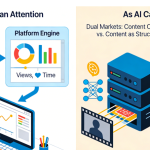
Firstly, they commodify attention and incentivize performance. The architecture of likes, shares, and follower counts transforms social life into a broadcast arena. Users become personal brands, engaged in constant “impression management.” This fosters a state of perpetual social surveillance, where the fear of saying the wrong thing or presenting an imperfect image leads to pervasive anxiety and inauthenticity. Connection becomes a performance, and the authentic, vulnerable self—the foundation of deep friendship—gets locked away.
Secondly, these platforms privilege breadth over depth and highlight reels over real life. They excel at maintaining a vast network of “contacts” but are structurally poor at facilitating the nuanced, slow-building, emotionally rich interactions that forge lasting bonds. Our feeds become a curated stream of others’ best moments, fueling social comparison on a previously impossible scale. As we compare our own messy, behind-the-scenes reality to everyone else’s polished highlight reel, feelings of inadequacy and isolation grow. The constant, low-grade awareness of what we are supposedly missing—the infamous Fear of Missing Out (FoMO)—is not a personal failing but a predictable response to an environment designed to stimulate it.
Thirdly, and perhaps most insidiously, digital interaction often displaces rather than supplements face-to-face contact. The quick hit of a text or scroll can feel satisfying in the moment, reducing the motivation to seek out the more logistically complex, but infinitely more nourishing, in-person meeting. Neuroscience supports this: the rich, multisensory feedback of physical co-presence—eye contact, touch, shared laughter, synchronized body language—triggers neurochemical cascades (involving oxytocin, endorphins, and serotonin) that are fundamental to bonding and stress relief. A video call or text thread can only simulate a pale shadow of this biological symphony.
A Pathology of the Body: The Stark Health Consequences
To dismiss loneliness as merely a “bad feeling” is a dangerous misconception. Chronic loneliness is a pathology of the body with severe physiological consequences. It triggers a sustained state of low-grade stress, keeping the body’s fight-or-flight response subtly engaged. This leads to elevated levels of stress hormones like cortisol, which, over time, contributes to inflammation, weakened immune function, increased blood pressure, and disrupted sleep.
Epidemiological research has rendered a sobering verdict: the health impact of prolonged loneliness is comparable to smoking fifteen cigarettes a day. It significantly elevates the risk of cardiovascular disease, stroke, dementia, depression, and anxiety. The U.S. Surgeon General’s advisory report frames it not as a personal crisis, but as a public one, demanding a systemic response on par with other major determinants of health like tobacco use or obesity.

Prescribing Community: Pathways from Isolation to Belonging
Reversing this epidemic requires moving beyond simplistic, individualistic advice (“just put your phone down”) and toward a societal prescription for community. The cure for loneliness is not less connection, but more meaningful, embodied connection. This demands intentional, multilevel effort.
On a societal and policy level, we must invest in the social infrastructure of belonging. This means funding and creating accessible “third places”—public libraries, parks, community centers, and arts venues—that facilitate unforced mingling. Urban planning should prioritize walkable neighborhoods and mixed-use spaces that encourage chance encounters. Workplace policies can support flexible schedules that allow time for caregiving and community involvement.
On a community and organizational level, the goal is to create “connective tissue.” This involves designing recurring, low-pressure group activities with a shared purpose: community gardens, book clubs, volunteer projects, skill-sharing workshops, or walking groups. These activities provide the crucial structure that reduces the social anxiety of open-ended interaction, allowing relationships to grow organically around a common task. Programs that intentionally bridge social divides—such as intergenerational initiatives pairing seniors with youths, or cultural exchange dinners—are particularly powerful.
On a personal level, it calls for conscious digital hygiene and proactive social investment. This means auditing one’s online interactions: Do they leave me feeling energized or depleted? Connected or performative? It involves setting boundaries to protect time for in-person relationships and having the courage to move from passive scrolling to active invitation—to transform a digital “we should meet” into a concrete plan. It requires cultivating the skill of vulnerability, of sharing not only triumphs but struggles with trusted others.
The loneliness epidemic is the canary in the coal mine of modern life, signaling that our social environment has become toxic to our innate human need for belonging. Hyper-connection was a seductive promise, but it has proven to be a poor substitute for the complex, embodied, and mercifully inefficient world of real human communion. The path forward is not to retreat from technology, but to reassert the primacy of the physical, the proximate, and the patiently built. It is to architect a world where community is not a forgotten relic, but a deliberate design principle. Our health, our happiness, and our very humanity depend on it.






Discuss