
The pervasive narrative of our time is one of digital toxicity—a language of addiction, distraction, and dopamine hijacking that frames technology as a contaminant to be purged. This has given rise to the popular, yet often futile, prescription of the “digital detox”: a dramatic, temporary withdrawal from our connected devices. While well-intentioned, this all-or-nothing approach is fundamentally flawed. It treats symptoms, not systems, and fails to address our enduring, inescapable entanglement with the digital world. A more sustainable and empowering paradigm is emerging: the Digital Diet. This is not a call to renunciation, but to conscious curation—a framework for cultivating a nourishing, intentional, and sustainable relationship with our tools.
The detox model fails because it is rooted in a premise of impurity. It suggests that health exists only in a state of digital absence, casting every notification as a pathogen. This binary thinking creates a cycle of guilt and relapse, where any usage feels like failure. More critically, it ignores the profound ways in which technology is woven into the fabric of meaningful modern life—from sustaining long-distance relationships and accessing education to managing our finances and exploring creativity. The goal cannot be to live outside this ecosystem, but to learn to thrive within it with agency and purpose. As a behavioral designer working on humane tech principles notes, “Telling someone to do a digital detox is like telling them to solve food issues by fasting. It doesn’t teach you how to eat well when you return to the table.”
The Digital Diet, in contrast, applies the timeless principles of nutritional wisdom to our information and interaction consumption. It asks not “How little can I use?” but “What use truly serves me?” It recognizes that just as food can be junk or nourishment, technology can be empty-calorie distraction or meaningful sustenance. The objective is to develop the metacognitive skills to tell the difference and the practical habits to act on that knowledge.

Implementing a Digital Diet involves a three-phase process of Audit, Design, and Nourishment.
Phase 1: The Non-Judgmental Audit. Before change, comes observation. For one week, track your digital engagement not with shame, but with the detached curiosity of a scientist. Use built-in screen-time tools or a simple notebook. Catalog not just duration, but intent and affect. When you pick up your phone, what is the trigger (boredom, anxiety, habit)? What is the sought-after reward? Most importantly, how do you feel afterward—informed, connected, and energized, or drained, anxious, and fragmented? This audit reveals your personal “digital nutrition label,” identifying high-value consumption versus empty informational carbs.
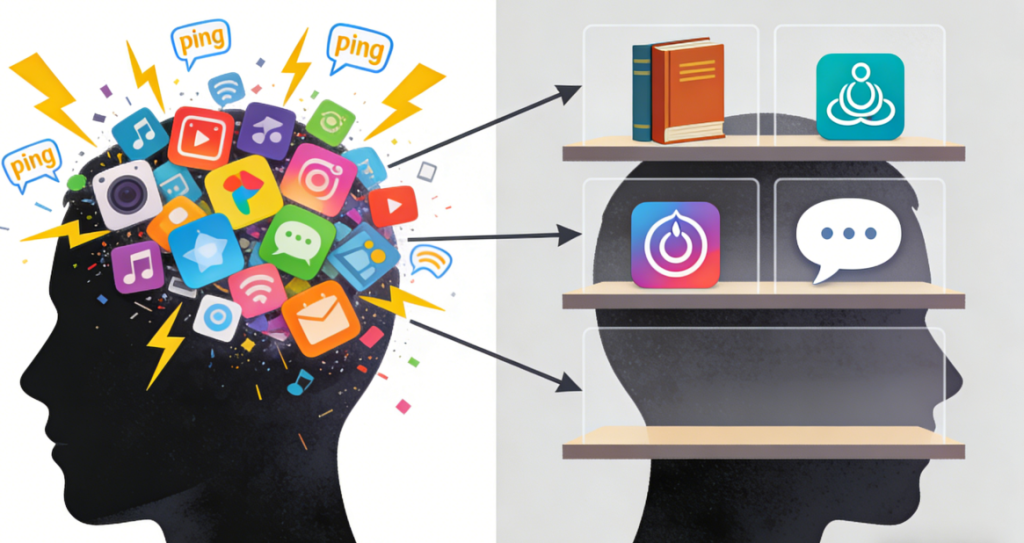
Phase 2: Intentional Architecture & Substitution. With awareness comes redesign. This is about restructuring your environment and habits to make better choices easier. It is proactive, not reactive.
- Categorize Your Apps: Label them as Tools (maps, banking, necessary work platforms), Nourishers (educational podcasts, meditation apps, creative platforms, meaningful messaging), or Distractors (infinite-scroll social feeds, sensational news, most games).
- Design Your Home Screen for Intention: Move Nourishers to your home screen. Bury Distractors in folders on a secondary screen, removing their visual cues. Disable all non-essential notifications for Distractors; allow them only for true Nourishers and Tools.
- Create “Tech Zones” and “Sacred Spaces”: Designate phone-free zones (the dinner table, the bedroom) and device-free times (the first hour after waking). Use physical barriers, like a charging station outside the bedroom.
- Practice Ritual Substitution: When the urge to mindlessly scroll arises from boredom or anxiety, have a pre-planned “nourishing” alternative ready: a physical book on the side table, a notepad for sketching, a five-minute breathing exercise. You are not denying an impulse, but redirecting it toward a more satisfying fulfillment.
Phase 3: Cultivating High-Quality Nourishment. The final step moves beyond restriction to active enrichment. Consciously seek out and engage with technology that adds depth, connection, and skill. This could mean:
- Using a language-learning app for 20 minutes instead of scrolling.
- Jooning a small, focused online community around a meaningful hobby instead of passively consuming broad feeds.
- Scheduling a video call with a distant friend with full attention, camera on, instead of a fragmented text exchange.
- Leveraging access to vast libraries, courses, or tutorials to build a tangible skill.
This framework acknowledges that willpower is a finite resource. By designing our digital environments and rituals with the same care we might apply to stocking a healthy pantry, we offload the cognitive burden from constant decision-making. The Digital Diet is not a one-size-fits-all plan, but a personalized practice of ongoing refinement. It transforms our relationship with technology from one of passive consumption and guilt to one of active choice and empowerment. The digital world is not a swamp we must escape, but a vast and varied landscape. We can learn to navigate it with purpose, feeding our minds with what truly enriches and connecting in ways that sustain, leaving the empty calories behind.







Discuss