
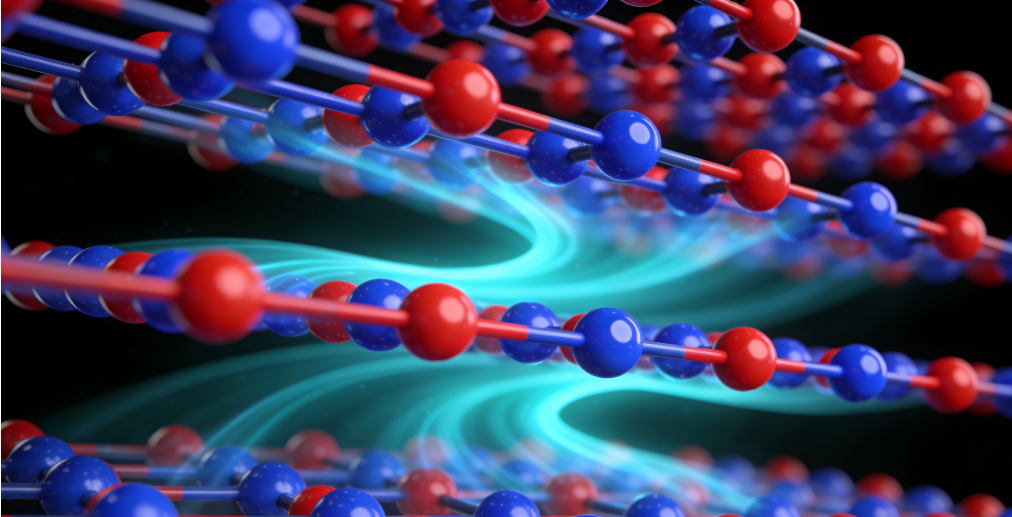
Imagine a world where electricity flows without a whisper of resistance—no heat, no loss, no waste. A world where magnetic trains glide effortlessly, medical scanners become as commonplace as smartphones, and the global energy grid operates with near-perfect efficiency. This is not science fiction. A quiet revolution is unfolding in material science labs, where researchers are cautiously optimistic about a breakthrough that could bring us closer to that reality.
For over a century, superconductivity—the ability of a material to conduct electricity with zero resistance—has captivated scientists. But it has remained largely confined to the realm of extreme cold, requiring costly cooling with liquid helium or nitrogen. The holy grail has always been a material that achieves this state at room temperature and ambient pressure, a discovery that would fundamentally rewrite the rules of energy and technology.
Recently, a murmur of excitement spread through the scientific community. A team working with a class of materials known as “layered nickelates” has observed signatures reminiscent of superconductivity under more practical conditions. These materials, complex oxides containing nickel, share structural similarities with the copper-based superconductors (cuprates) that caused a sensation decades ago. However, the nickelates appear to behave differently, offering a fresh path for exploration.
The significance lies not just in the higher temperature at which these effects are observed, but in the material’s unique electronic structure. Early data suggests its electrons may pair up and coherently move—a hallmark of superconductivity—through a mechanism distinct from traditional models. This provides a new puzzle for physicists: understanding how it works could unlock the principles needed to design even better materials.
The potential implications are staggering. Consider the electrical grid. Nearly 10% of generated power is lost during transmission and distribution due to resistive heating in conventional wires. Superconducting cables could eliminate these losses overnight, drastically reducing energy costs and carbon emissions. Compact, ultra-strong electromagnets would enable smaller, more affordable MRI machines and pave the way for fusion reactors that confine plasma with unparalleled precision.
The computing world would also be transformed. Superconducting circuits operate without the resistive heat that plagues silicon chips, allowing for dramatically faster processing speeds and the potential for a new generation of energy-efficient supercomputers and quantum devices.
Yet, experts urge measured optimism. The findings are preliminary. The current material still requires significant cooling, though less extreme than before. Its ability to carry large currents—a critical property for practical use—remains unproven. The history of superconductivity is dotted with moments of hope followed by years of painstaking validation. Reproducing these results in other labs is the essential next step.
Dr. Elena Vance, a condensed matter physicist not involved with the discovery, commented, “This is a compelling new direction. It’s like we’ve been trying to solve a puzzle in a dark room with a flashlight on one corner. This work might have just illuminated a different corner. We don’t have the full picture yet, but we now have more light to see by.”
The road ahead is long. Researchers must refine the material’s composition, stabilize its properties, and scale up synthesis from microscopic flakes to usable wires or films. This process could take a decade or more. But the discovery’s value is immediate: it provides a vital new clue in the grand quest to understand and engineer superconductivity.
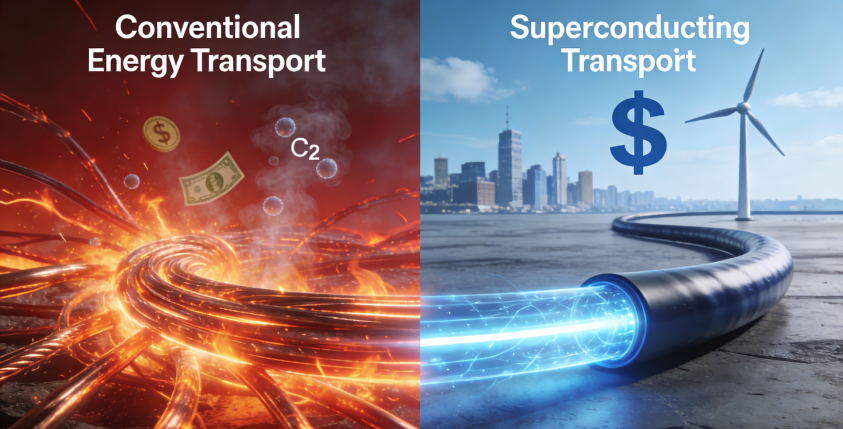
We stand at a silent dawn. While headlines proclaim “breakthroughs,” the real work continues in the hum of cryogenic coolers and the focused analysis of data. This latest chapter in the nickelate story doesn’t mark the end of the journey, but it may well be remembered as the moment the map was redrawn, guiding us toward a future built not on silicon or copper, but on the flawless flow of electricity.







Discuss