
Let’s play a game. Imagine you’re the world’s greatest orchestra conductor, but your musicians are a group of incredibly talented, hyper-caffeinated toddlers. One plays a perfect chord, then immediately starts crying about a cookie. Another is a drumming prodigy but can’t sit still for more than a nanosecond. This, in a nutshell, has been the monumental headache of building a useful quantum computer.
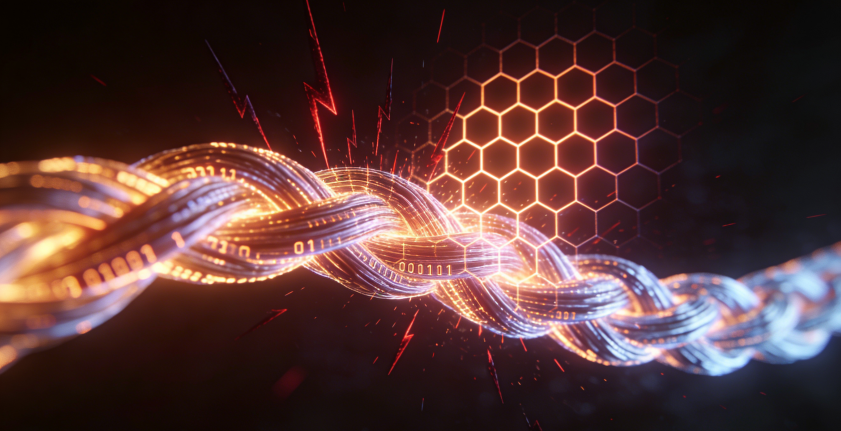
The toddlers are quantum bits, or qubits. They hold the mind-bending power to be a 1 and a 0 at the same time (thanks to a trick called superposition) and to be spookily connected to each other across space (that’s entanglement). Get enough of them behaving in sync, and they could out-calculate every supercomputer on Earth combined, solving problems in medicine, materials science, and climate that are currently impossible.
The catch? They are hilariously, catastrophically fragile. A passing vibration, a stray microwave, even a cosmic ray can cause a “quantum tantrum”—a loss of their precious state called decoherence. It’s like building a house of cards in a wind tunnel. For decades, we’ve needed millions of physical qubits just to create a handful of stable, “logical” qubits reliable enough to do real work, a process known as quantum error correction. It seemed decades away.
Until now.
Think of the latest prototype not as a toddler orchestra, but as that orchestra’s first professional rehearsal with a genius, hyper-vigilant chaperone. Researchers have just demonstrated a system where a small array of physical qubits is managed in real-time by an error-correction system that spots and fixes mistakes as they happen. This isn’t just a better mousetrap; it’s the first real proof that the core idea of fault-tolerant quantum computing can work outside of a textbook.
The magic isn’t just in raw qubit count—it’s in the architecture and the intelligence of the control system. “The leap isn’t that it’s bigger; it’s that it’s finally obedient,” explains a lead engineer on the project. “We’ve moved from just observing the errors to actively silencing them, continuously. It’s the difference between watching a fire and having an automated sprinkler system.”
So, what does a “useful” quantum computer actually do? Don’t expect it on your desk. Its first jobs will be intensely specialized. It could simulate a complex molecule to discover a new life-saving drug in weeks, not centuries. It could model new superconductors or efficient fertilizers, slashing the energy and environmental cost of manufacturing. For finance and logistics, it could optimize global systems in ways that would take classical computers the age of the universe to figure out.
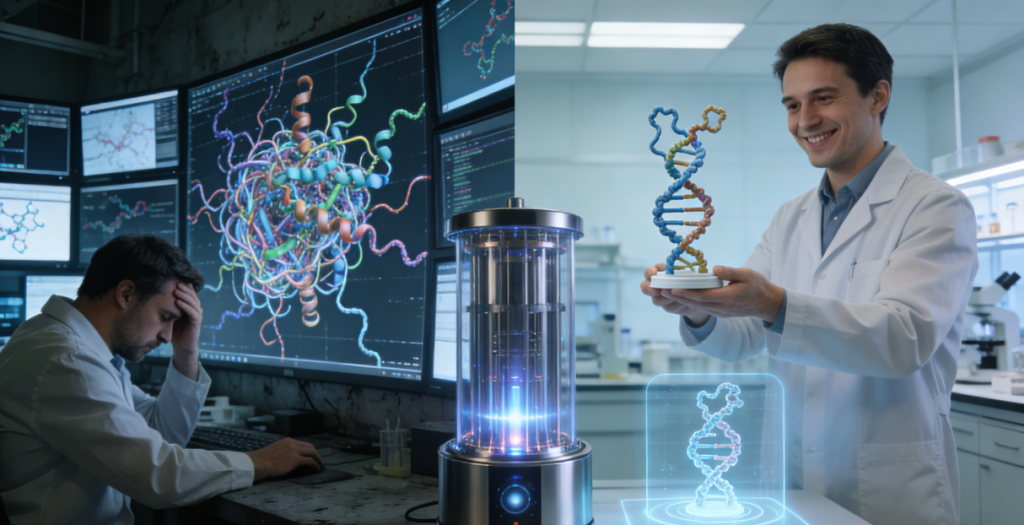
This prototype is the Wright Flyer of its field—clunky, specific, and not crossing an ocean anytime soon. But it proved flight was possible. Similarly, this machine proves that practical, error-corrected quantum computation is a reality of engineering, not just physics. The path from here to a machine with thousands of logical qubits is still steep, but for the first time, the path is visible.
We’ve spent years in the “noisy” era of quantum computing, where qubits were too fleeting to trust with big tasks. With this demonstration, we’ve just watched the first machine step into the “fault-tolerant” era. The toddlers have a guardian, the house of cards now has glue, and the orchestra, at long last, is starting to listen to the conductor. The curtain is rising, not on a final show, but on a spectacular, world-changing rehearsal.






Discuss