
For decades, the engine of global retail was powered by a simple, linear logic: extract, produce, sell, discard. This model prized newness, fueled planned obsolescence, and measured success in units shipped. Beneath this constant churn, however, a powerful counter-current has been swelling, and it has now reached flood stage. We are witnessing the explosive rise of the recommerce economy—a sophisticated, technology-driven ecosystem for the resale, refurbishment, and rental of pre-owned goods. From luxury handbags and fast-fashion tops to smartphones and gaming consoles, the secondary market is no longer a fringe yard sale but a central pillar of modern consumption. This shift from a linear “take-make-waste” model to a circular flow of goods is more than a trend; it is a fundamental re-architecture of value, challenging the foundational economics of traditional retail and heralding a new era where longevity, authenticity, and access rival the allure of the brand-new.
The numbers are staggering and undeniable. The global secondhand market is growing at multiples of the overall retail sector, on track to dwarf fast fashion within the decade. This growth is not a niche phenomenon but a mainstream movement driven by a potent convergence of forces. The primary driver is a profound shift in consumer consciousness, particularly among younger demographics. For Gen Z and Millennials, recommerce is not a compromise but a preference—a smarter, more sustainable, and often more creative way to consume. It represents a dual value proposition: economic rationality (access to higher-quality or luxury goods at lower prices) and ecological ethics (extending product lifecycles and reducing waste). This mindset directly challenges the cult of newness, transforming a pre-owned item from a symbol of lack into a badge of savvy.
This cultural shift has been explosively enabled by platform technology. Digital marketplaces like Depop, The RealReal, and StockX have not merely digitized the classified ad; they have de-risked and systematized peer-to-peer commerce. They provide authentication, standardized listings, secure payments, and logistical support, solving the traditional friction points of trust and convenience. For the first time, an individual’s closet or gadget drawer can function as a micro-warehouse, integrated into a global distribution network. This technological infrastructure has unlocked latent asset value on an unprecedented scale, creating a fluid and efficient market for goods that were previously considered sunk costs.

The economic impact of this recommernce surge is most acutely felt by industries built on disposability and relentless newness. Fast fashion, in particular, faces an existential contradiction. Its business model depends on high-volume, low-cost, rapid-turnover garments. The thriving resale of its own products, however, extends their active life, directly reducing the need for new purchases. A Zara blouse circulating on Poshmark is a blouse not bought new. This imposes a new form of market cannibalization, forcing brands to grapple with the fact that their products now compete against their own past inventory in a secondary market they do not control. The linear model’s end point—discard—has been short-circuited.
Similarly, the consumer electronics industry, long reliant on a two-year upgrade cycle, is being disrupted by the robust refurbished market. Companies like Back Market have professionalized the process of restoring and certifying used devices, offering warranties that rival new products. For cost-conscious and environmentally aware consumers, a refurbished flagship phone from two generations ago often presents a better value proposition than a new mid-range model. This pressures manufacturers to either compete in the recommernce space themselves or fundamentally innovate to make new devices compelling enough to justify the premium—shifting competition from planned obsolescence to genuine technological leapfrogging.
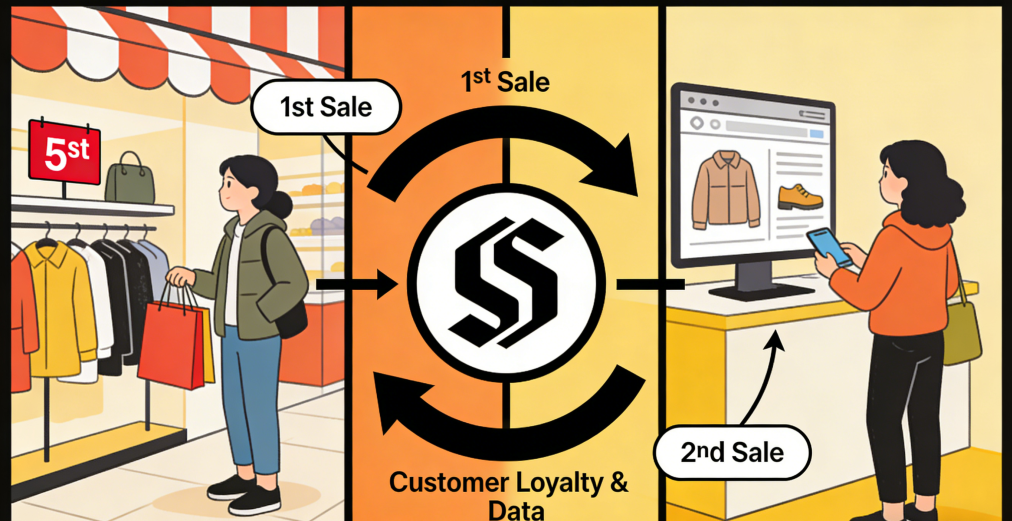
In response, forward-looking brands are moving from seeing recommernce as a threat to embracing it as a strategic channel for customer acquisition, brand loyalty, and data insight. Patagonia’s Worn Wear program and IKEA’s buy-back initiatives are pioneers, explicitly encouraging resale to reinforce their sustainability credentials and embed their products in a circular relationship with the customer. Luxury brands, once fiercely protective of distribution, now cautiously partner with platforms like The RealReal to authenticate goods, recognizing that the secondary market fuels aspiration and serves as a gateway for new buyers. The most sophisticated players are building closed-loop ecosystems, where they take active ownership of the entire product lifecycle—from first sale to refurbishment to resale—capturing value at multiple points and transforming a one-time transaction into an ongoing service relationship.
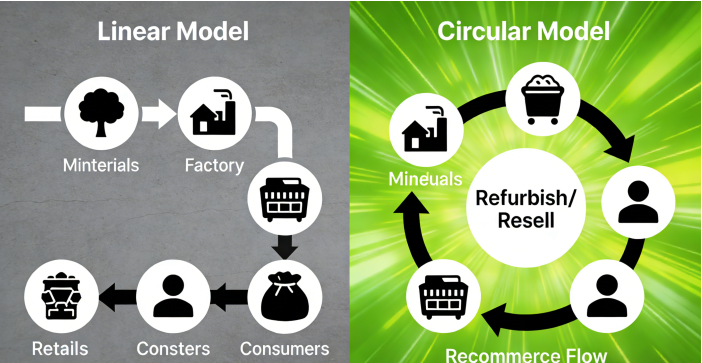
The recommernce revolution carries profound implications for the entire retail supply chain. Demand forecasting must now account for the re-entry of used goods into the competitive set. Marketing must communicate durability and residual value, not just seasonal novelty. Logistics networks need to handle reverse flows as efficiently as forward ones. Ultimately, the success metric is shifting from volume sold to total value stewardship—maximizing the economic and brand value extracted from a product over its entire lifespan, across multiple owners.
This is not a return to thrift but the birth of a sophisticated, circular commercial logic. It signals a maturation of consumerism, where value is decoupled from virginity and embedded in utility, story, and sustainability. The recommernce economy proves that the most disruptive competitor to a new product is often a perfectly good old one. It challenges retailers to stop selling things and start curating flows of value, building businesses that thrive not by encouraging endless consumption, but by facilitating intelligent, enduring circulation. In this new paradigm, the brand that wins is not necessarily the one that sells the most new items, but the one whose products live—and are traded—the longest.







Discuss