
Sicily isn’t just a destination; it’s a complex, sensory-rich text written in lava stone, baroque stucco, and salt spray. To visit as a traveler is to skim the surface. To truly engage is to become a decoder, learning to read the layers of conquest, myth, and la dolce vita etched into its very landscape. This isn’t a checklist tour; it’s a deep dive into the soul of the Mediterranean’s most compelling island.
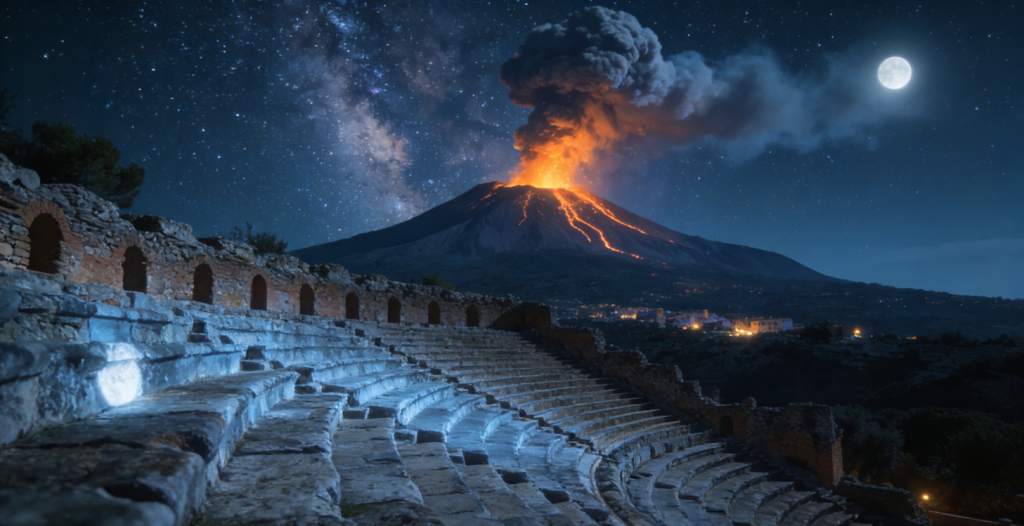
My journey began not in a city, but with the island’s primal heartbeat: Mount Etna. Driving the winding roads toward the smoking giant, the landscape transforms into a surreal, mineral world of black lava flows frozen in time. I chose a guided hike on the quieter, northern slopes. Standing on a ridge, feeling the ground hum beneath my boots while looking down at vineyards clinging to ancient ash, I understood Etna isn’t a backdrop—it’s the central character. The lesson? Don’t just see it from Taormina; walk on it. The perspective shift is foundational. That evening, in the hilltop town of Taormina, the ancient Greek Theatre framed the smoldering peak perfectly. It was the first of many moments where Sicily’s layers—Greek, volcanic, modern—snapped into a single, breathtaking alignment.
From nature’s fury to human grandeur, the southwest coast offers a masterclass in scale. The Valley of the Temples in Agrigento is often described as a site. It is, in fact, a spiritual confrontation. Walking the sacred way at sunset, the towering columns of the Temple of Concordia glow with honeyed light against a violet sky. The genius lies in the placement: these testaments to human reason and order are juxtaposed with the vast, chaotic sea beyond. The emotional impact is profound. For a quieter counterpoint, I drove inland to nearby Piazza Armerina, where the Villa Romana del Casale’s astonishing, vibrant mosaics depict daily Roman life with whimsical detail. The contrast between Agrigento’s public piety and Casale’s private luxury is key to understanding the Roman imprint.
No decoding of Sicily is complete without confronting its magnificent, chaotic heart: Palermo. This city is a full-body experience. It’s the scent of frying panelle (chickpea fritters) and jasmine, the cacophonous symphony of Vespas in the Vucciria market, and the visual overload of the Palatine Chapel. Here, Byzantine mosaics of Christ Pantocrator shimmer above a floor of inlaid Islamic geometry, all under a carved Moorish honeycomb ceiling—a perfect, dizzying metaphor for the island itself. To navigate Palermo, embrace the paradox. Find serenity in the geometric gardens of the Zisa, a Norman-Arab castle, then dive back into the chaotic energy of the Ballarò market, where the theatrical hawking of fish and blood oranges is a centuries-old performance.
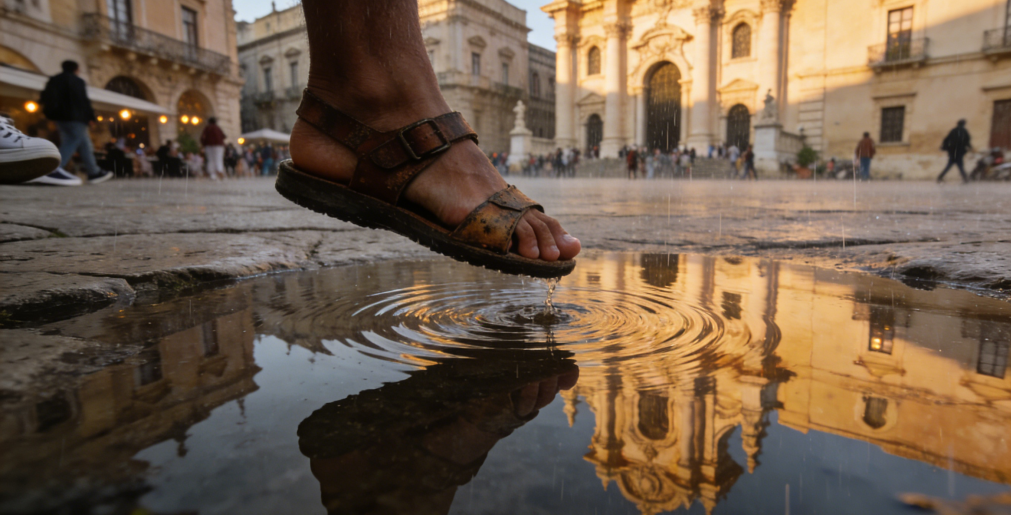
To balance Palermo’s intensity, the southeast offers a more refined, but no less historic, narrative. Syracuse, specifically the island of Ortigia, is a lesson in elegant decay and renaissance. Wandering its labyrinthine lanes, you stumble upon the Duomo, a staggering architectural palimpsest where the columns of a 5th-century BC Temple of Athena form the very structure of the Baroque cathedral. Swimming in the crystalline, spring-fed Fontana Aretusa amidst papyrus plants feels like a dip into myth. A short drive north, the Baroque towns of the Val di Noto (Noto, Ragusa Ibla, Modica) rise like golden, sculpted confections from the hills. Their beauty is no accident; they are a profound statement of rebirth after the devastating 1693 earthquake.
The Decoder’s Toolkit: Essential Sicilian Intelligence
- The Strategic Base: Don’t try to see it all from one hotel. Split your stay strategically. Three nights in Palermo for the northwest, three in Syracuse or Ortigia for the southeast, and perhaps two in a central hill town like Enna or Ragusa to explore the interior. This minimizes exhausting drives.
- The Culinary Cipher: Sicilian food is a history lesson on a plate. Go beyond pasta. Seek out the Arab influences: couscous al pesce in Trapani, caponata (sweet & sour eggplant), and granita con brioche for breakfast. In Modica, taste the cold-worked, Aztec-inspired chocolate. Your best meals will be at unassuming trattorias with no English menu.
- The Transportation Reality: Rent a car. Public transport will severely limit your access to the island’s soul—the hidden agriturismos, the remote temples at Selinunte, the wild beaches of San Vito lo Capo. Embrace the chaotic yet predictable rhythm of Sicilian driving; it’s part of the immersion.
- The Temporal Key: Visit in the shoulder seasons (late April-June or September-October). You’ll avoid the oppressive heat and tourist crowds of July-August, and the landscape is either blooming or harvest-gold.
Sicily rewards the curious, the patient, and those willing to look beyond the postcard. It’s in the conversation with a fisherman mending his nets in Cefalù, the taste of a wine grown in volcanic soil, and the quiet awe in a forgotten Norman church. It doesn’t give you a holiday; it gives you a story—a complex, beautiful, and endlessly fascinating story that you become a part of. To know Sicily is to begin to understand the Mediterranean itself.





Discuss