
Ever feel like you need to step right into a postcard? To wander a place so picturesque it almost feels too perfect to be real? That’s the exact magic of Ogimachi, Shirakawa-go. Nestled deep in the mountains of Gifu Prefecture, this isn’t just a village; it’s a living, breathing piece of Japanese history and folklore, a UNESCO World Heritage site that feels like a warm hug for the soul. Forget the fast-paced energy of Tokyo—here, time moves with the seasons and the gentle rustle of the river. Let me walk you through why this should be next on your Japan bucket list.
First Glimpse: A Valley of Praying Hands
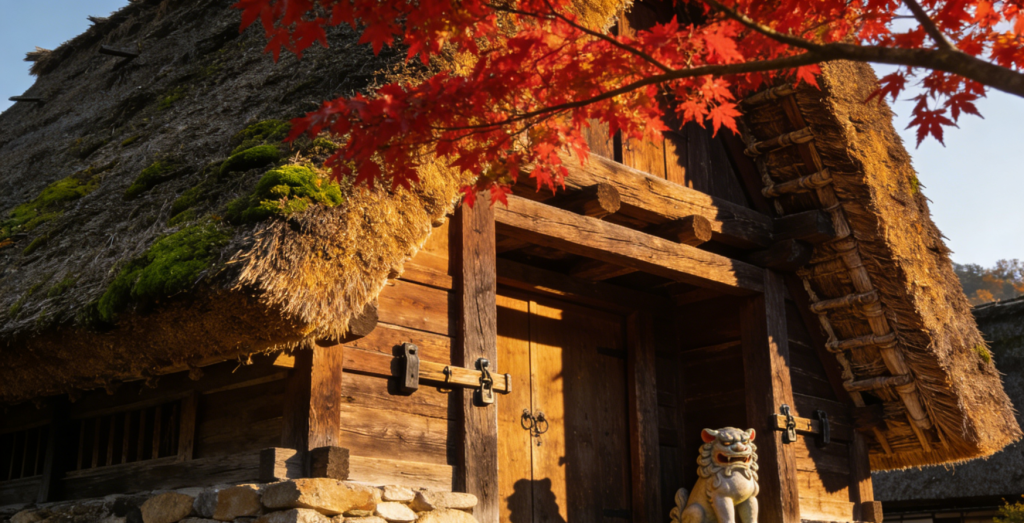
My journey began with a winding bus ride through the dramatic Hida Mountains. Just as you think you’ve seen all the scenery, the valley opens up, and there it is: Ogimachi. The first sight of the gassho-zukuri farmhouses is genuinely breathtaking. The name “gassho-zukuri” means “constructed like hands in prayer,” and seeing their steep, thatched roofs (some with angles of 60 degrees!) clustered together against a backdrop of deep green hills is a moment you don’t forget. These roofs are the village’s signature, designed over 250 years ago to withstand the region’s legendary heavy snow—allowing it to slide right off and prevent collapse.
I stayed in one of these houses turned minshuku (family-run guesthouse), the Wada House. Waking up in a 300-year-old building, smelling the sweet, earthy scent of the kaya (pampas grass) thatch, and sharing a home-cooked dinner with the family was the heart of the experience. It’s a direct, personal connection to a way of life that has persisted for centuries.
Living History: The Wisdom of the Gassho
To truly appreciate the genius of this place, you have to look closer. I spent a morning at the Shirakawa-go Gassho-zukuri Minkaen, an open-air museum. It’s a collection of several traditional houses, a shrine, and a watermill, all moved here for preservation. Walking through these structures, you see the incredible craftsmanship up close: the massive wooden beams fastened without nails, the clever attic spaces used for silkworm cultivation (a key part of the old local economy), and the central irori (sunken hearth) that kept families warm. It’s a masterclass in sustainable, communal living designed in perfect harmony with a harsh environment.
But the absolute “pinch-me” moment comes with a view from above. A short but steep hike (or a quick shuttle bus ride in summer) leads you to the Ogimachi Castle Ruins Observation Deck. From this vantage point, the entire village unfolds below you like a meticulously crafted model. The geometric rooftops, the winding Sho River, the patchwork of fields—it’s the iconic shot, and it’s worth every step. It’s here you fully grasp why this place is a protected treasure.
A Village for All Seasons
One of Shirakawa-go’s greatest charms is how it transforms throughout the year. I visited in late autumn, when the surrounding mountains were on fire with red and orange foliage, creating a stunning contrast with the dark thatch and white river stones. But I’m already dreaming of returning.
- Winter (Jan-Feb): This is the famous “light-up” season. The village is blanketed in deep snow, and select houses are illuminated at night, creating a scene straight out of a snow globe. Access requires advance planning and reservations for special viewing buses.
- Spring (Apr-May): Lush green returns, and the fields around the houses begin to bloom. It’s fresh, peaceful, and less crowded.
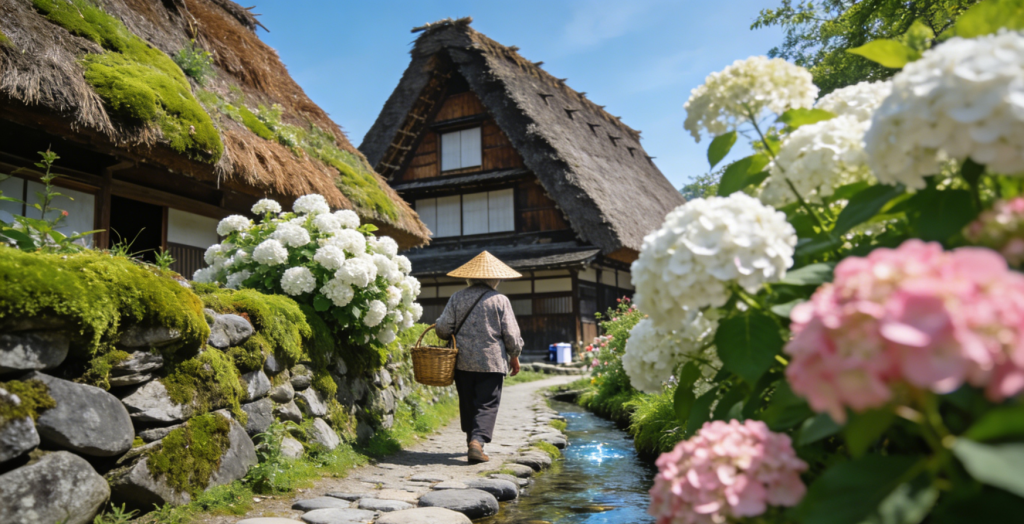
- Summer (Jun-Aug): Vibrant green and clear blue skies. It’s a great time for leisurely strolls and enjoying the cool mountain air.
- Autumn (Oct-Nov): My personal favorite for photography. The fall colors are spectacular, and the weather is crisp and perfect for hiking.
The Shirakawa-go Slow Travel Guide
Getting There & Around:
The most common gateway is via bus from Takayama (about 50 minutes) or Kanazawa (about 75 minutes). I highly recommend basing yourself in charming Takayama for a night or two as well. The village itself is very walkable.
To Stay or Not to Stay:
While a day trip is possible, staying overnight is transformative. The day-trippers leave by late afternoon, and you get the village almost to yourself in the serene evening and early morning. Book your minshuku well in advance, especially for peak seasons.
Eat & Explore:
Don’t miss trying Hida beef—whether as a skewer, sushi, or in a stew. Local soba noodles and gohei-mochi (rice cakes slathered in a sweet nutty sauce) are must-try snacks. Simply wandering the paths between the houses, crossing the suspension bridges over the river, and popping into small craft shops selling locally made sake and handicrafts is the perfect pace.
Shirakawa-go is more than a sight; it’s a feeling. It’s the quiet awe of human ingenuity, the profound peace of mountain life, and the warmth of timeless hospitality. It’s a reminder that some of the most advanced design is that which has endured, gracefully, for hundreds of years. It’s a fairy tale you can actually walk into.







Discuss