
Beneath the veneer of academic achievement and socioeconomic success lies a silent, burgeoning crisis. Asian American youth, long mythologized as the “Model Minority,” are experiencing alarming rates of anxiety, depression, and suicidal ideation, a reality starkly at odds with the stereotype of effortless triumph. This pervasive mental health emergency is not a mere byproduct of adolescence but a direct consequence of a toxic triad: the crushing weight of the model minority myth, profound cultural and identity conflict, and the unacknowledged legacy of intergenerational trauma. To address this crisis is to engage in a necessary act of cultural demystification and social reckoning.

The “Model Minority” stereotype, ostensibly a compliment, operates as a pervasive psychological straitjacket. It homogenizes a wildly diverse population encompassing over 20 ethnicities and cultures into a monolith of high-achieving, obedient, and resilient individuals. This false narrative erases disparity—such as the poverty within Southeast Asian refugee communities—and pathologizes struggle. When a young person internalizes this myth, their failure to meet its impossible standard becomes a source of deep shame and a perceived betrayal of family and community. The pressure is not merely to succeed, but to succeed without visible effort or complaint, rendering their suffering invisible. A high school junior in San Francisco captures this bind: “If I get an A, it’s expected. If I feel depressed, it’s a personal weakness that brings shame. There is no room for me to just be human.”
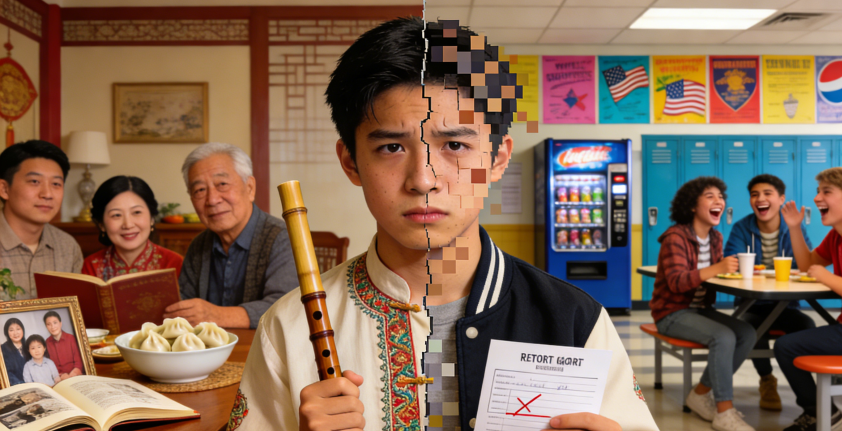
This external pressure catalyzes a brutal internal identity conflict. Many Asian American youth navigate a “double consciousness,” perpetually code-switching between the cultural values of their heritage—which may prioritize collectivism, familial duty, and emotional restraint—and the American emphasis on individualism, self-expression, and verbalized emotionality. This clash is not abstract; it manifests in daily dilemmas: Is pursuing a passion in the arts a noble act of self-realization or a selfish abandonment of familial expectation? Is seeking therapy a proactive step toward health or an admission of failure that dishonors the family’s ability to solve its own problems? The psyche becomes a battleground, with constant negotiation sapping emotional resilience and fostering a sense of perpetual alienation from both communities.
Compounding this is the specter of intergenerational trauma, a rarely discussed but powerful force. For many families, particularly refugees from war-torn regions like Vietnam, Laos, or Cambodia, the trauma of displacement, loss, and survival is a silent inheritance. Parents, having endured unspeakable hardship to provide opportunity, may equate emotional discussion with vulnerability or may lack the cultural framework to address psychological pain, instead focusing solely on tangible security (education, career). Their children, sensing this unspoken history, often feel burdened by a debt that can never be repaid and inhibit their own suffering to avoid adding to their parents’. A university counselor specializing in Asian American students notes, “The trauma is in the silence. The student carries not only their own stress but the unspoken grief of generations, with no language or permission to process it.”
The outcome is a mental health landscape of alarming contours. Studies consistently show that while Asian American adolescents exhibit higher rates of depressive symptoms than their white peers, they are significantly less likely to utilize mental health services. Suffering is somaticized—manifesting as headaches, insomnia, or digestive issues—or channeled into perfectionistic overwork, creating a vicious cycle. The fear of stigma within their community and the perception of racism or cultural incompetence from mainstream providers create formidable barriers to care.
Confronting this crisis demands a multi-systemic response that moves beyond generic mental health advocacy. Culturally competent care is non-negotiable. This means providers must understand the specific cultural forces at play, offer services in relevant languages, and actively work to destigmatize help-seeking within these communities. Schools must actively deconstruct the Model Minority myth in curricula and provide safe spaces for Asian American students to explore identity without judgment.
Perhaps most critically, a new dialogue within families and communities must be nurtured—one that separates worth from achievement, that honors sacrifice without demanding silent suffering in return, and that creates a vocabulary for emotional pain. This involves empowering community elders and leaders to speak openly about mental health and supporting peer-led initiatives that normalize struggle.
The mental health crisis among Asian American youth is a direct indictment of a convenient social myth. It reveals the high human cost of reducing complex human beings to stereotypes of success. Their struggle is a call to listen to the silence, to see the pain behind the prestige, and to affirm that their value lies not in their performance, but in their humanity. The path to healing begins not with another demand for resilience, but with a long-overdue validation of their struggle.







Discuss