
To step into the Djemaa el-Fna is to enter a living theater of commerce, a symphony of clattering pans, drifting incense, and vibrant hues. Here, amidst the labyrinthine alleys radiating from the main square, every transaction is more than a purchase—it’s a conversational dance, a test of wit, and an opportunity for genuine human connection. For the unprepared traveler, this can feel overwhelming. But with the right mindset and tactics, you can transform the bustling souk from a daunting maze into your personal treasure trove. This guide moves beyond basic haggling tips to offer a strategic framework for engaging authentically and securing meaningful deals.
The Foundation: Understanding the “Game”
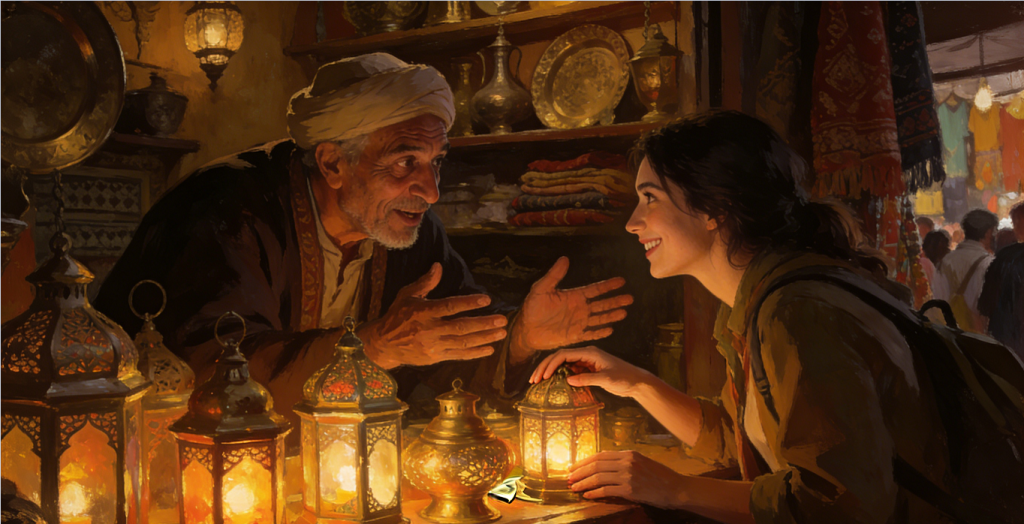
First, dispel any anxiety. Haggling (souq in Arabic) is not a confrontation but a culturally embedded social ritual. The initial price quoted is a starting point in a playful, often theatrical, negotiation. The objective isn’t to “defeat” the merchant but to arrive at a mutually agreeable price through a spirited exchange. Respect is the currency that underpins the entire process.
Your Strategic Playbook
Preparation is Power: Research & Demeanor
Know the Range: Before your visit, have a vague sense of item values. A quick online search or observing multiple stalls for similar goods (e.g., leather poufs, ceramic tagines, kaftans) will give you a baseline. Your target is not the “local price,” but a fair tourist price that respects the craft.
The Right Mindset: Enter with a smile, calm confidence, and ample time. Rushing signals desperation. Dress respectfully but not ostentatiously; avoid flashing expensive jewelry or tech.
The Opening Moves: Engagement and First Offer
Build Rapport First: Don’t immediately ask “How much?” Browse. Ask about the item’s story: “Is this leather hand-stitched?” “What region are these spices from?” Learn the merchant’s name. This establishes you as an interested individual, not just a price tag.
The Counter-Offer: When the first price comes (e.g., 500 Dirhams), react with a good-natured laugh or a playful “For me?!” This acknowledges the ritual. Your counter should be firm but friendly, typically starting at 30-40% of the asking price. State it clearly: “I can offer 180 Dirhams.”
The Negotiation Dance: Tactics and Grace
The Incremental Climb: Expect a series of offers and counter-offers. Increase your bid in small increments (20-30 Dirhams at a time). Let the merchant see you “conceding” with reluctance.
Leverage & Bundling: If buying multiple items, negotiate the lot together. Say, “For this lamp and these two bowls, what is your best price?” This gives the seller incentive to offer a better deal per item.
The Silent Pause: After an exchange, sometimes the most powerful tool is a thoughtful, silent smile while holding the item. This puts gentle pressure on the seller to fill the silence with a better offer.
The Closing Act: The Walk-Away & Final Agreement
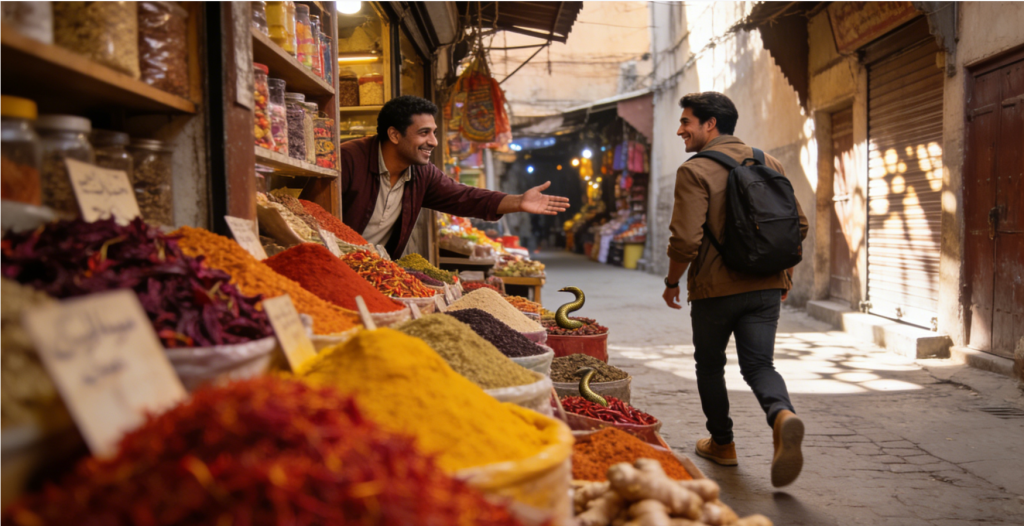
The Strategic Exit: If you hit a standstill, politely say, “Shukran” (thank you), smile, and begin to walk away slowly. Genuinely be prepared to leave. About 50% of the time, you’ll be called back with a new, lower price. If not, you can always circle back later.
Sealing the Deal: Once a price is agreed upon, the deal is binding. Shake hands, express your pleasure (“Mashi mushkil” – no problem), and handle the cash respectfully. Count it discreetly.
Pro-Tips for the Savvy Souk-Goer
Cash is King: Use smaller denomination Moroccan Dirhams. Having exact change for your final price avoids last-minute “no change” issues.
Learn Key Phrases: A little Arabic or French goes a long way. “B’saha” (enjoy it) when you buy, “Allah yekhallek” (God bless you) as a thank you.
Trust Your Instincts: If a price feels wrong after negotiation, or the interaction feels aggressive, it’s perfectly fine to walk away. Another stall with a more enjoyable merchant awaits.
Ultimately, a successful souk experience is measured not just by the discount, but by the story you bring home—the shared laughter, the learned craft, and the object that now holds the memory of a spirited, respectful exchange. Embrace the performance, and you may find the real treasure is the interaction itself.






Discuss