
A fundamental recalibration is underway in the high-stakes world of hard technology venture capital. The investment thesis that long dominated—chasing breakthrough scientific discovery above all else—is being supplanted by a more demanding, integrated model. The premium is shifting from pure “technical scarcity” to demonstrable “commercialization velocity,” forcing a rewrite of the playbook for funding everything from quantum computing and fusion energy to advanced robotics and synthetic biology.
For over a decade, the mantra was to find and fund the most defensible, elusive technology. Investor pitches revolved around patent portfolios, PhD density, and performance metrics that dwarfed incumbents. The market, the manufacturing pathway, and the unit economics were often treated as secondary concerns, to be addressed after the core scientific risk was retired. This approach birthed giants but also created a graveyard of “deeptech” companies that were brilliant in the lab yet stranded in the “valley of death” between prototype and product.
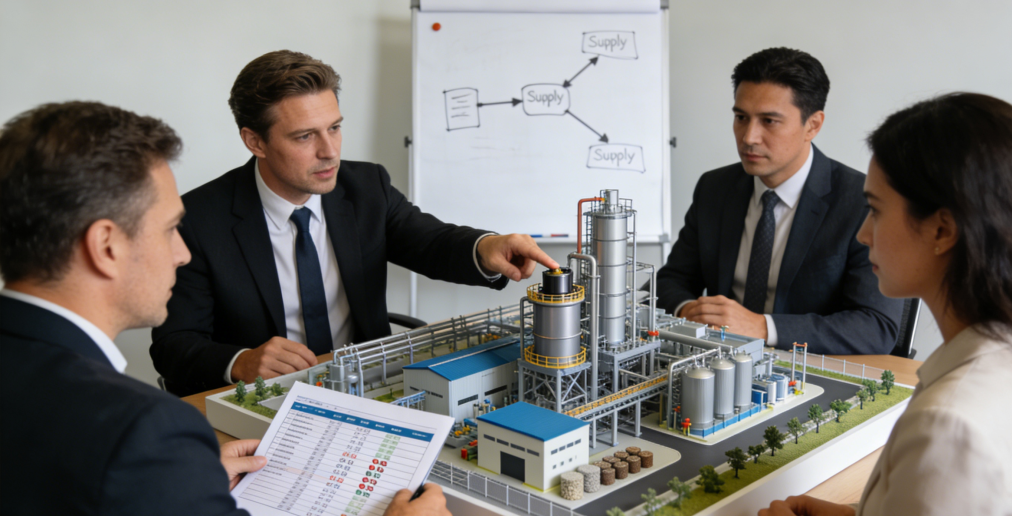
The shift is driven by a confluence of pressures: rising capital costs, geopolitical supply chain shocks, and sobering lessons from high-profile struggles in sectors like autonomous vehicles and consumer hardware. “We’re past the era of funding science projects,” states a partner at a premier Silicon Valley deep-tech fund. “The new question isn’t ‘Can you build it?’ but ‘Can you build it reliably, repeatedly, and at a cost the market will bear?’ The bottleneck is no longer invention—it’s translation.”
This new logic manifests in rigorous, upfront due diligence on commercial readiness. Investment committees now prioritize teams that blend scientific vision with operational grit. A founder with a background in semiconductor fabrication or advanced manufacturing is as valued as the lead scientist. Due diligence digs into supply chain security for critical minerals, the scalability of chemical processes, and the availability of skilled technicians, not just algorithm efficiency.
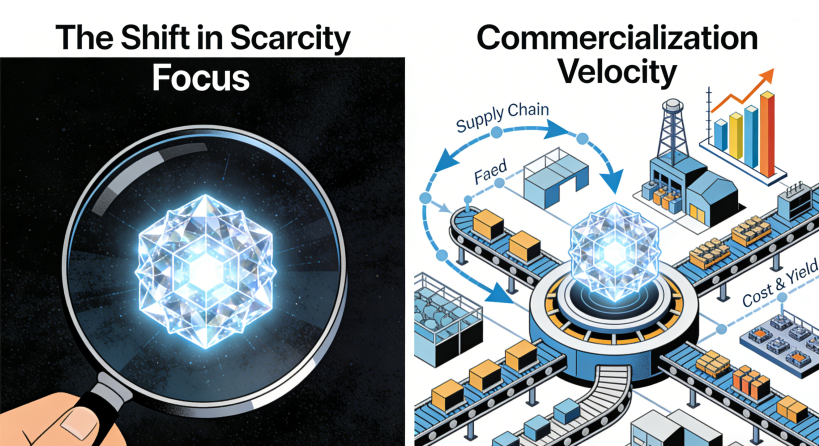
“The spreadsheet has become as important as the prototype,” notes an analyst tracking venture flows into climate tech. “Investors are modeling production costs at 10,000-unit scale before the first full-scale pilot line is built. They’re asking for signed letters of intent from potential customers who have validated the technical specifications, not just expressions of interest.”
This environment favors companies designed for industrial integration from day one. Consider the contrast in next-generation battery investing. Company A develops a cell with 50% greater energy density but relies on cobalt sourced from a single, geopolitically unstable region and requires entirely new manufacturing equipment. Company B achieves a 30% improvement using abundant, localized materials and designs its cell to fit into existing modular assembly lines. Increasingly, Company B is winning the rounds. Its advantage is “commercial architecture,” not just laboratory performance.
The most sought-after ventures now demonstrate a tripartite proof point: technical validity, manufacturing feasibility, and a clear path to a first major commercial contract. This has led to the rise of “pilot-scale” or “first-of-a-kind-facility” funding rounds, which eclipse earlier, smaller R&D rounds in size. Capital is flowing toward de-risking scale-up itself.
This recalibration is also reshaping exit strategies. The acquirer of a hard tech startup is less likely to be a Big Tech company seeking an R&D team, and more often a industrial conglomerate—an automotive OEM, a aerospace leader, or a chemical giant—seeking a validated, production-ready innovation to slot into its own value chain. The premium is on de-risked assets.
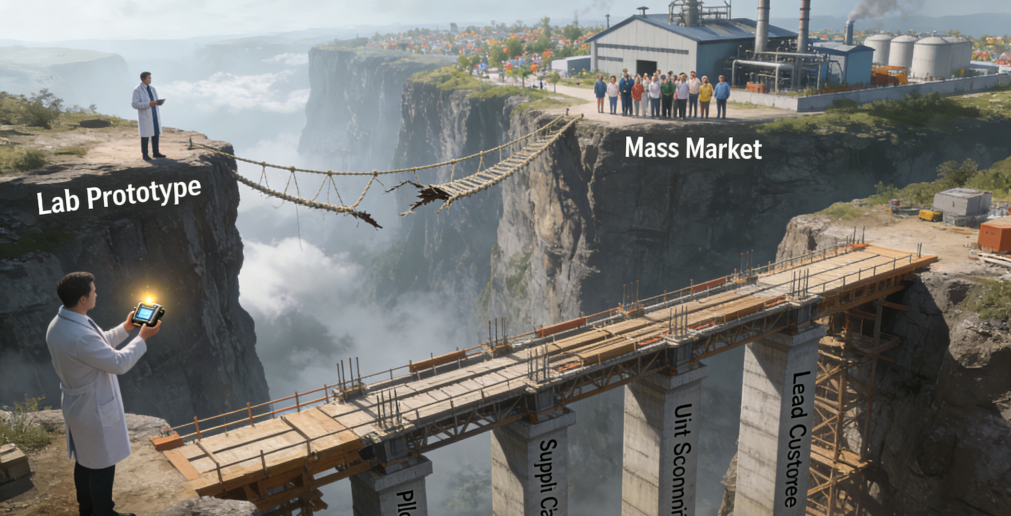
For founders, the message is clear: the compelling narrative must encompass the entire journey from lab bench to customer’s factory floor. Investors are no longer buying into a vision of technological disruption alone; they are buying into a credible, executable plan to build a business around a novel technology. In the high-risk theater of hard tech, the new star is not the lone inventor, but the masterful architect who can bridge the worlds of science and industry.







Discuss