
Let’s be honest. For a sun-chaser, Malta ticks the boxes: guaranteed vitamin D, turquoise water, and a coastline made for Instagram. But for a traveler whose camera roll is a chaotic mix of Byzantine floor plans and local wine labels, Malta hits differently. It’s not a destination you simply visit; it’s a 316-square-kilometer palimpsest you attempt to decode. My week there was less a holiday and more a thrilling, sun-bleached crash course in layered civilizations. Forget the beach towel; bring your best walking shoes and a head full of questions.
My base was Valletta, the Baroque fortress-city that feels less built and more carved from the living rock. Wandering its grid of honey-coloured streets isn’t a stroll; it’s a lesson in defensive urban planning. I’d start mornings losing myself in the silent, monumental space of St. John’s Co-Cathedral. From its austere fort-like exterior, nothing prepares you for the sensory overload within: a floor of intricate marble tombs, a ceiling by Mattia Preti exploding with frescoes, and Caravaggio’s monumental Beheading of St. John lurking in the oratory. It’s a perfect metaphor for Malta itself—unassuming on the outside, overwhelmingly dense with history within.
But Valletta is just the grand entry hall. The real thrill lies in the Three Cities—Vittoriosa, Senglea, and Cospicua—across the Grand Harbour. Taking a traditional dghajsa (water taxi) across the water, you trade the tourist polish for a grittier, more authentic heartbeat. In Vittoriosa’s Collachio area, the narrow streets are lined with the auberges (inns) of the Knights of St. John. Standing in the shadow of the Inquisitor’s Palace, you can almost feel the weight of centuries of power, faith, and intrigue. This is where history feels tangible, not curated.
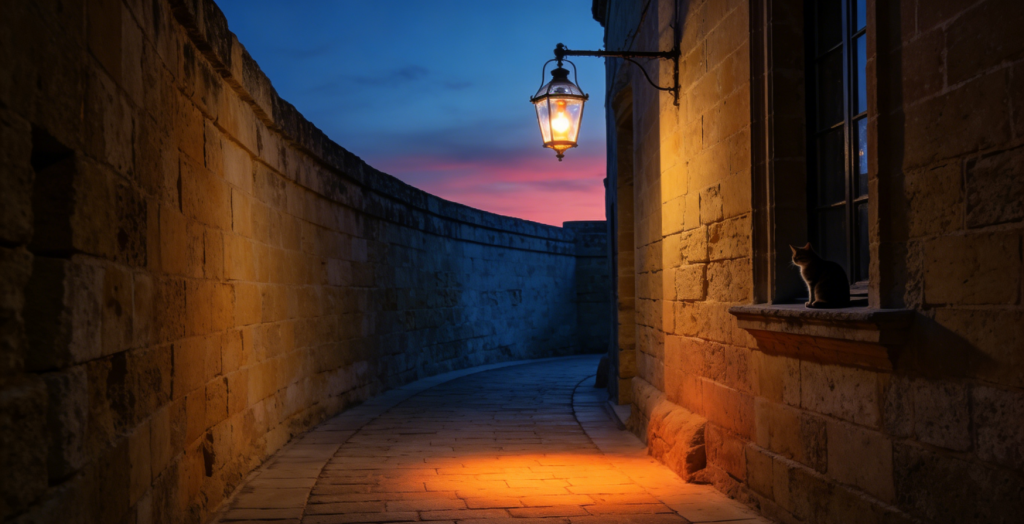
For a cinephile, Malta is a live-action backlot. The island’s ancient aesthetic has doubled for everything from ancient Rome to King’s Landing. A pilgrimage to Mdina, the silent city, is essential. Walking its lifeless, lantern-lit streets after dusk, you’re not just in a medieval walled town; you’re on the set of Game of Thrones (it stood in for King’s Landing’s streets). Further west, the now-collapsed Azure Window on Gozo island left a raw, dramatic coastline that famously framed Daenerys’s wedding in Qarth. While the arch is gone, the site retains a powerful, melancholic grandeur. In Fort Ricasoli and the ancient ruins at Mellieha, I spent an afternoon spotting locations from Gladiator and Troy, the modern film lore seamlessly baked into the ancient stone.
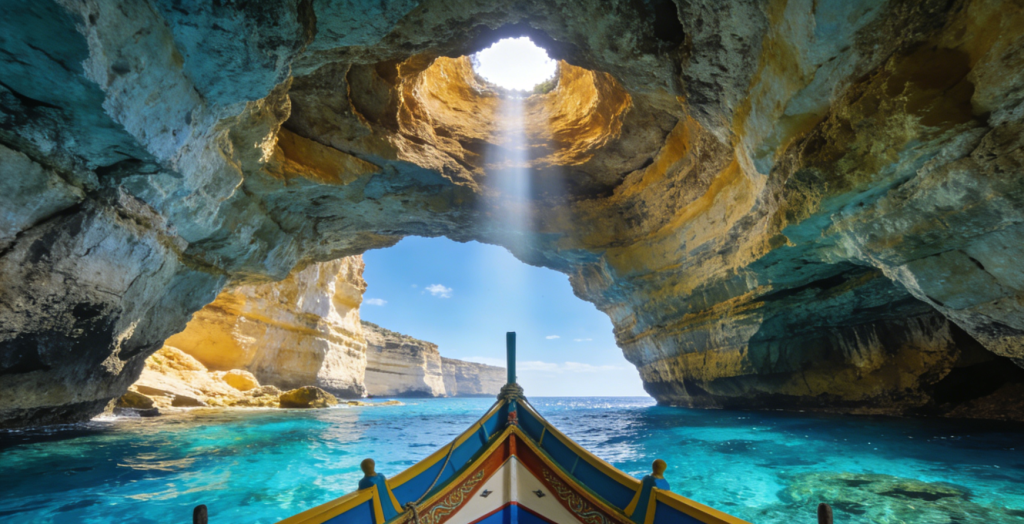
However, Malta’s genius lies in its contrasts. After a morning of historical density, I’d seek the elemental relief of the south coast. The Blue Grotto is no secret, but taking a small boat from the fishing village of Wied iż-Żurrieq at dawn, before the crowds, is transformative. The sea caves, illuminated in impossible shades of cyan and sapphire, feel like a natural cathedral. Similarly, a ferry to Gozo reveals a slower, more rural Malta. A hike down to the secluded Sanap Cliffs or a swim in the red sands of Ramla Bay offers a solitude and raw beauty that the main island often lacks.
The local rhythm is dictated by the pastizz. This flaky, ricotta- or pea-filled pastry is the national fuel. The best aren’t found in fancy cafés but in unassuming, fluorescent-lit hole-in-the-wall shops like Crystal Palace Bar in Rabat or Serkin in Cospicua, where you eat standing up, brushing pastry flakes off your shirt, surrounded by chatting locals. For a proper meal, I sought out family-run spots like Tal-Petut in Vittoriosa for creative, story-driven Maltese tasting menus, or the legendary Tmun in Mgarr, Gozo, for the day’s catch simply grilled by the water.
The Hard-Won Wisdom (A Traveler’s Postscript):
- Rent a Car, But Be Brave: Public transport is slow. A small rental car is freedom, especially for Gozo. But Maltese driving is… assertive. Roundabouts are gladiatorial combat. Embrace it as part of the cultural immersion.
- Seek the Festa: Village festas (patron saint festivals) are the soul of summer Malta. The explosions of fireworks (both by day and night), marching bands, and streets crammed with food stalls are an unforgettable spectacle of chaotic joy. Check local schedules.
- The Stone is Cold, The Sun is Hot: The limestone buildings radiate heat by day but get chilly at night, even in summer. Always carry a light layer.
- Look Beyond the Harbour: Spend at least two nights on Gozo. The pace is slower, the landscapes are wilder, and the Ġgantija Temples (older than Stonehenge) offer a humbling perspective.
Malta doesn’t give up its secrets easily. It demands that you look beyond the resort promenades, engage with its complex past, and adapt to its vibrant, noisy present. It’s a place where you can be exploring a 5,000-year-old necropolis in the morning, swimming in a crystalline sea in the afternoon, and toasting with a local Kinnie under the stars of a Baroque fortress by night. It’s not a simple beach break; it’s a full-sensory, stone-carved epic. And for a traveler hungry for layers, there’s no better feast.







Discuss