
For decades, Attention-Deficit/Hyperactivity Disorder (ADHD) has been defined by its deficits. The very name—a “Disorder” of attention deficit and hyperactivity—frames it as a collection of shortcomings: a lack of focus, a failure of control, a deviation from a neurological norm. This medical-model lens, while useful for diagnosis and certain interventions, tells only half the story, and often the more damaging one. A powerful paradigm shift is now underway, reframing ADHD not as a pathology to be cured, but as a neurocognitive difference with its own unique set of strengths and challenges. This is the heart of the neurodiversity movement, which argues that variations in brain wiring, like ADHD and autism, are natural, valuable forms of human diversity. To reclaim ADHD is to move from asking “What’s wrong with you?” to exploring “How does your mind work, and how can it thrive?”

The traditional deficit model views ADHD through a prism of impairment: executive dysfunction, emotional dysregulation, and academic or occupational underachievement. Treatment focuses primarily on symptom reduction—using stimulant medications to improve focus and behavioral therapy to instill coping mechanisms. While these tools are vital and life-changing for many, they often leave the individual feeling fundamentally “broken,” forever trying to approximate a neurotypical standard. The neurodiversity perspective does not dismiss these challenges; it contextualizes them. It posits that the distress associated with ADHD stems less from the neurology itself and more from a mismatch between the individual’s cognitive style and the demands of their environment. A brain wired for rapid pattern recognition, exploration, and dynamic thinking will understandably struggle in a rigid, sedentary, and monotonous setting. The problem isn’t the brain; it’s the ill-fitting desk it’s forced to sit at.
When we shift the lens from deficit to difference, a remarkable profile of cognitive strengths comes into focus. These are not mere silver linings; they are the inherent flip side of the diagnostic criteria.
What is labeled as distractibility is, in another context, divergent thinking and radar-like environmental awareness. The ADHD brain makes connections between seemingly unrelated concepts, fueling creativity, innovation, and humor. It is the mind that sees the novel solution because it wasn’t rigidly locked onto the obvious path.
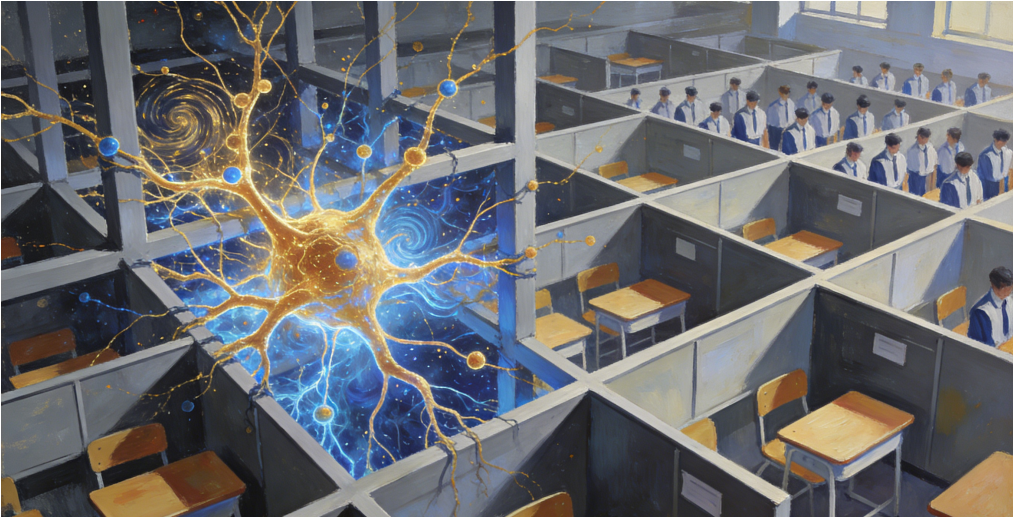
What is termed hyperactivity or restlessness often manifests as boundless energy, resilience, and a drive for intense engagement. When channeled into a passionate interest, this becomes a powerful engine for achievement. It’s the capacity for immersive effort that can outlast neurotypical peers when the task aligns with intrinsic motivation.
The challenge with sustained attention on non-preferred tasks reveals its counterpart: hyperfocus. The ability to become so deeply absorbed in a compelling project that time and external stimuli fade away is a state of peak productivity and flow that many neurotypical people strive to achieve. This isn’t a lack of attention; it’s an extraordinarily deep but selective channel of attention.
Furthermore, the rejection sensitivity and emotional intensity common in ADHD can translate into profound empathy, passion, and a strong sense of justice. These individuals often feel things deeply and care intensely, making them fierce advocates, loyal friends, and passionate artists.
Reclaiming ADHD, therefore, is an active process of cognitive ecology—designing a life that cultivates the strengths and accommodates the challenges. It begins with reframing the internal narrative from one of shame to one of identity. It’s about recognizing that the “symptoms” which caused trouble in a standardized classroom might be the very assets needed in a dynamic startup, a creative studio, or an emergency room.
Strategically, this means moving beyond generic productivity hacks. It involves engineering environments for success: using body-doubling (working alongside someone) for accountability, leveraging technology for externalizing memory (apps, voice notes, elaborate calendars), and structuring work in short, intense sprints followed by movement breaks. It means pursuing careers that offer novelty, variety, and immediate feedback rather than those demanding prolonged, solitary detail-work.
Crucially, it calls for a societal shift. Educational systems must move away from one-size-fits-all models toward personalized learning that values project-based exploration and multiple forms of intelligence. Workplaces must prioritize outcomes over hours logged at a desk, offering flexible schedules and spaces that allow for both collaborative energy and focused pods. This is not about lowering standards, but about widening the pathway to excellence.
The neurodiversity movement is not a denial of the very real struggles faced by those with ADHD. It is a rebellion against the idea that those struggles define them. It is a recognition that a brain that struggles to file papers might be exceptional at connecting galaxies of ideas. By shifting our focus from deficit to difference, we do more than empower individuals with ADHD; we enrich our collective human potential. We move from forcing a square peg into a round hole, to building a world with space for pegs of every shape, realizing that the complex, non-linear, and vibrant pattern they create together is far stronger and more interesting than any uniform grid could ever be.






Discuss