
The post-pandemic office is haunted by a quiet, stubborn ghost. It doesn’t manifest in angry resignations or loud protests, but in the precise, dispassionate execution of a job description. It’s the sound of a laptop closing at 5:01 PM, the polite decline of a non-urgent weekend request, the conscious refusal to graft one’s identity onto a corporate slideshow. This phenomenon, dubbed “quiet quitting,” is not a passive act of laziness, but a deliberate, collective strategy of self-preservation. It represents a fundamental fracture in the covenant of modern work, a direct response to the epidemic of burnout and a profound, post-lockdown reevaluation of what work means, where it should end, and what we are truly producing in its name.

For decades, the professional ideal, particularly in knowledge economies, was the “ideal worker”—a figure perpetually available, emotionally invested, and whose worth was measured by a visible, often unsustainable, surplus of effort. Burnout was the price of admission, a badge of honor reframed as temporary exhaustion. The pandemic shattered this theater. It collapsed the spatial and temporal boundaries between work and life, turning homes into endless conference rooms. In this pressure cooker, a critical mass of workers experienced two simultaneous revelations: first, that the relentless hustle did not guarantee security or fulfillment, and second, that life outside work was not merely a supporting act, but the main event. Quiet quitting emerged not as a withdrawal from work, but as a tactical withdrawal from a culture of performative overwork. It is the establishment of a minimum viable professionalism to protect a maximum viable self.
Beneath this behavioral shift lies a deeper, more consequential evolution: the fragmentation of traditional work meaning. The old narratives that tied purpose directly to corporate ladder-climbing or organizational loyalty have decayed. In their place, workers are engaging in a quiet but radical act of meaning repatriation. Purpose is no longer solely mined from a job title but is assembled from a portfolio of life—caregiving, community, hobbies, rest. Work is increasingly evaluated through a strict transactional lens: it is a source of income and, at best, a context for specific skills or social connection, but rarely the sole source of identity. This represents a catastrophic blow to the managerial philosophy that sought to engineer employee engagement through mission statements and corporate culture. When workers refuse to be emotionally conscripted, the leverage of the organization fundamentally changes.
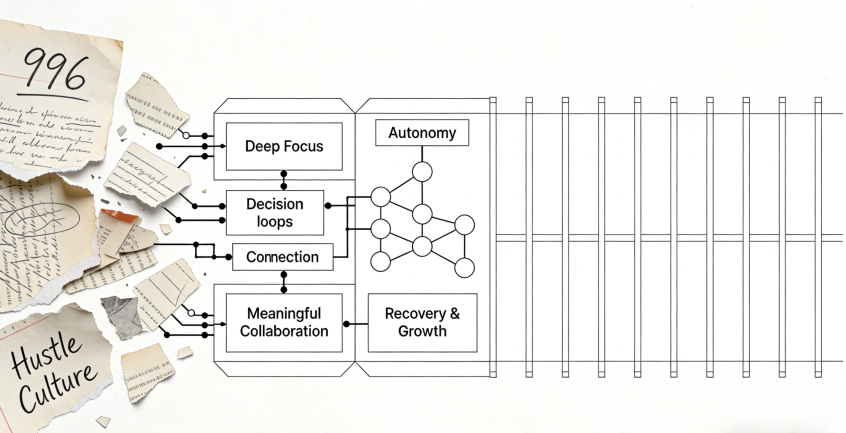
This insistence on a transactional relationship is, paradoxically, an intensely emotional demand for the right to boundary. The pandemic’s great blur demanded a great clarification. Quiet quitting is the practical enforcement of this new line in the sand. It reclaims time as a non-negotiable asset. Neuroscience and occupational health research clearly show that constant cognitive switching and the “always-on” state deplete executive function, increase error rates, and trigger chronic stress responses. The worker who silently enforces a boundary is not shirking; they are engaging in a biological and psychological necessity for sustainable performance. They are rejecting the fallacy that more hours equal more productivity, pointing instead to the robust data on the productivity gains of focused work, adequate recovery, and autonomy.
The response from many corporate structures has been a mixture of confusion and coercion, manifesting in clumsy demands for “return to office” or surveillance software to track activity. This misses the point entirely. The issue is not presence; it is the architecture of work itself. The modern workplace is often a masterpiece of friction: endless meetings that could be emails, layered approvals that stifle agency, and communication tools that fracture attention into meaningless shards. Burnout is less about the volume of work and more about this constant, draining cognitive tax of navigating poorly designed systems. Quiet quitting is, in part, a rational boycott of this inefficient theater, a refusal to burn energy on the bureaucratic rituals that surround actual value creation.
Therefore, the path forward is not to “solve” quiet quitting or to pathologize burnout, but to see them as diagnostic symptoms of a broken system. The answer lies in a fundamental redesign of productivity. This requires leaders to move beyond measuring inputs (hours online, visible busyness) and instead obsess over clear outcomes and empowered execution. It means creating cultures where disconnection is respected, where focus is protected by eliminating low-value interactions, and where well-being is integrated as a core performance metric, not a sidebar HR initiative.
Ultimately, this silent revolt signals the end of work as a totalizing institution. It announces that the workforce will no longer subsidize poor management with their unpaid overtime, their compromised mental health, or their fragmented personal lives. The post-pandemic employee is not seeking a better way to burn out; they are demanding a sustainable way to be productive. They are forcing a long-overdue conversation about the difference between activity and achievement, between presence and contribution, and between a job that takes and a life that gives. The future of work belongs not to the loudest hustler, but to the organizations wise enough to listen to the quiet.







Discuss