
Forget everything you think you know about Spain’s sun-drenched coasts. Beyond the well-trodden paths to Granada’s Alhambra or Seville’s plazas, there exists a place where history is not merely displayed but is the very substance of the streets, the paint on the walls, and the air you breathe. Frigiliana, often crowned as Andalusia’s most beautiful white village, is less a destination and more a sensation—a poignant, breathtaking dialogue between light, stone, and memory.
Perched on the slopes of the Almijara mountains, this is a village where every brilliant white façade is a page, and every winding, flower-drenched alley is a sentence in a complex story. It’s a story of three cultures, of conquest and coexistence, of tragedy, and ultimately, of resilient beauty. This isn’t just a photo stop; it’s a journey into the heart of authentic Spain.
A Walk Through Living History: The Cobblestones Speak
Your exploration begins not at a gate, but by simply stepping into the labyrinth. The Barrio Mudéjar, or Moorish quarter, is Frigiliana’s soul. Here, the streets are so narrow they seem to embrace you, paved not just with cobblestones but with intricate, hand-painted ceramic tiles known as baldosas. These aren’t mere decorations; they are a unique, open-air history book. As you ascend the steep, stepped paths, follow the tiles. They narrate the village’s most profound chapter: the 16th-century rebellion and eventual expulsion of the Moriscos (Muslims forced to convert to Christianity).
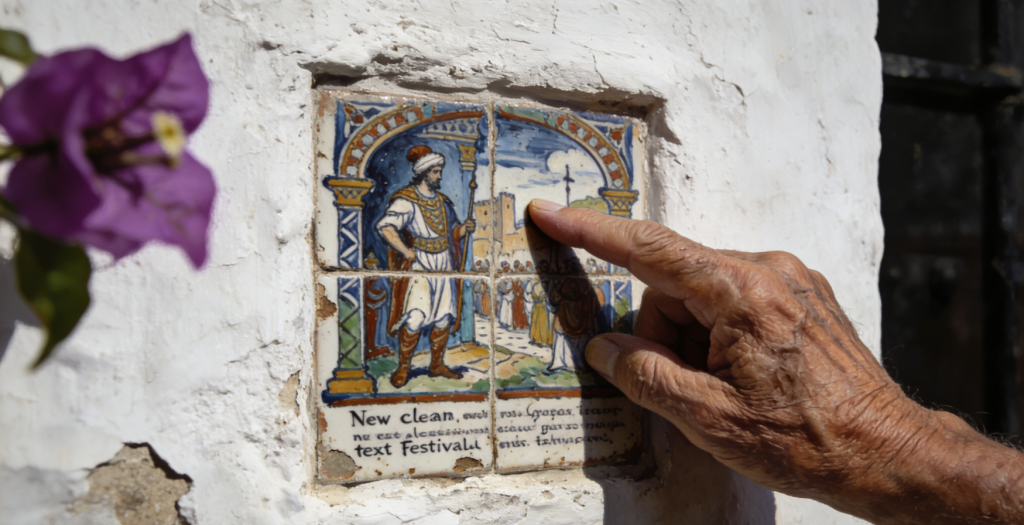
This history is not hidden in a museum; it’s underfoot and on the walls. Scenes of resistance, flight, and sorrow are depicted in vivid blues and ochres, a silent, moving testament that gives Frigiliana its profound depth. This tangible link to the past is why the village is poignantly nicknamed “La Villa de las Tres Culturas” (The Town of Three Cultures), celebrating its intertwined Christian, Jewish, and Muslim heritage. Look for the central well, a simple monument symbolizing a fragile moment of shared necessity between faiths.
Amidst this history, life blooms vibrantly. Every white wall is a canvas for cascading bougainvillaea in shocking pinks and purples. Painted doors in cobalt blue, sunflower yellow, and earthy terracotta frame entrances, while the air carries the sweet scent of jasmine. Look up: hand-painted ceramic plates adorn walls, and colorful linens flutter from balconies. Each turn offers a new, perfectly composed still life, making it a photographer’s paradise. Key spots for that iconic shot include the main street, Calle Real, and any of the steep, narrow staircases vanishing into floral arches.
The Rewards of the Climb: Views, Flavors & Soul
The climb through the maze is a pilgrimage with delicious rewards. At the village’s zenith, you’re greeted by the El Ingenio viewpoint (Mirador). Here, catch your breath as the world falls away to reveal a staggering panorama: the geometric patchwork of white rooftops you just navigated tumbling down towards a sapphire stripe of the Mediterranean, framed by the rugged, hazy peaks of the Almijara mountains. It’s a view that encapsulates the magic of Andalusia—the perfect marriage of human artistry and majestic nature.
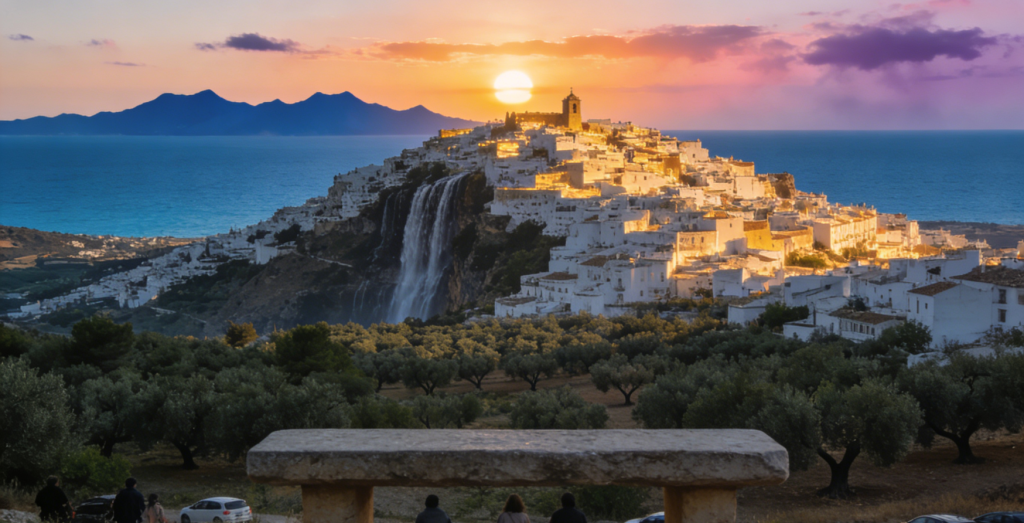
This is the moment to indulge. Find a table at a cliffside terrace like El Mirador or La Taberna del Sacristán. Order a glass of local Málaga wine or a refreshing tinto de verano. For a true taste of place, you must try Miel de Caña. This dark, rich “cane honey” (a molasses-like syrup) is a unique local product, historically produced at the village’s 16th-century manor, El Ingenio. Drizzle it over goat cheese, enjoy it in pastries, or take a jar home—it’s the edible essence of Frigiliana.
As you descend, wander into the small, independent shops. Skip mass-produced souvenirs and seek out local crafts: hand-painted ceramics, olive wood utensils, or soaps made with Andalusian olive oil. You might even find unique items made from cork, a regional specialty.
The Frigiliana Rhythm: A Practical Whisper
Frigiliana’s charm is its authenticity, which demands a respectful approach.
- Getting There & Around: The village is most easily visited as a day trip from the coastal town of Nerja (home to the famous Nerja Caves). From Nerja’s bus station, a local bus (about €1-2) or a short 15-minute taxi ride (around €10-15) will bring you up the hill. Warning: Bus services, especially on Sundays, can be infrequent, so check schedules or be prepared to taxi. Many organized tours from Málaga or the Costa del Sol combine Frigiliana with Nerja and its caves for a seamless experience.
- The Best Time: To experience Frigiliana’s whisper, arrive early. By 9 or 10 a.m., you’ll have the shimmering streets largely to yourself, with only the company of lazy cats and the sound of shopkeepers arranging their wares. Visit in spring or early autumn for mild weather and fewer crowds.
- Cultural Pulse: If you can, plan your visit for late August. The Festival de las Tres Culturas fills the streets with music, dance, and food celebrating the village’s Christian, Jewish, and Muslim roots, transforming its poignant history into a vibrant, joyful present.
A Final, Lasting Impression
Leaving Frigiliana, you don’t just take photos. You carry with you the feel of cool, whitewashed stone under your palm, the taste of mountain honey, the dizzying contrast of blue sky against a white alley, and the quiet weight of stories told in tile. It’s a place that proves true beauty is never simple. It is layered, complex, and often born of resilience. In a world of crowded highlights, Frigiliana remains a heartfelt, whispering secret, waiting to be felt, not just seen.





Discuss