
The dominant narrative of automation is one of displacement. Visions of assembly lines manned by robots and algorithms parsing legal documents fuel a pervasive anxiety: that human labor is on an inevitable path toward obsolescence. This narrative, however, is predicated on a fundamental misconception—that technological capability maps directly onto economic value. A closer examination of the evolving labor market reveals a powerful counter-trend. As automation and artificial intelligence efficiently absorb tasks defined by repetition, rule-following, and data processing, they are not rendering human workers irrelevant. Instead, they are performing a stark act of economic signal amplification, throwing into sharp relief a suite of deeply human capabilities that have always been valuable but are now becoming paramount. The true story of automation is not the decline of human work, but the dramatic revaluation of the intangible, non-codifiable skills that constitute automation’s enduring blind spot.
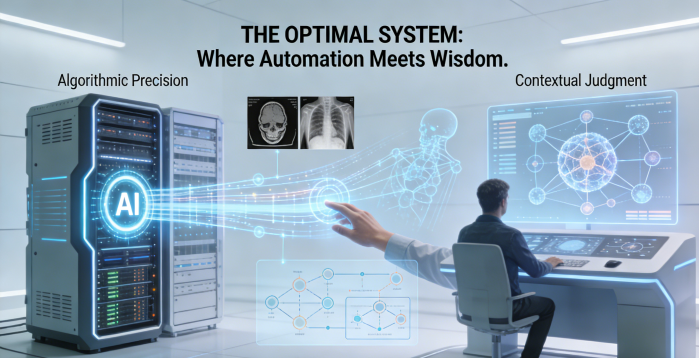
This blind spot exists because the very architecture of automation is built on codification. Machines excel where objectives are clear, processes are repeatable, and success metrics are quantifiable. They thrive in the realm of the explicit. The human skills that are surging in value, however, reside almost entirely in the domain of the implicit and the contextual. These are not the skills listed in procedural manuals, but the capabilities required when no manual exists. Consider the work of a master nurse, a skilled teacher, a strategic negotiator, or a creative director. Their primary value lies not in following instructions, but in exercising contextual judgment—reading a subtle change in a patient’s condition that vital signs haven’t yet captured, adapting a lesson plan in real-time based on the mood of a classroom, sensing unspoken reservations in a negotiation, or synthesifying cultural trends into a resonant brand narrative. This form of judgment cannot be reduced to an algorithm because it operates in precisely those situations where data is incomplete, ambiguous, or laden with human emotion. Automation’s spread makes the possession of such judgment not merely an asset, but a critical source of competitive differentiation.
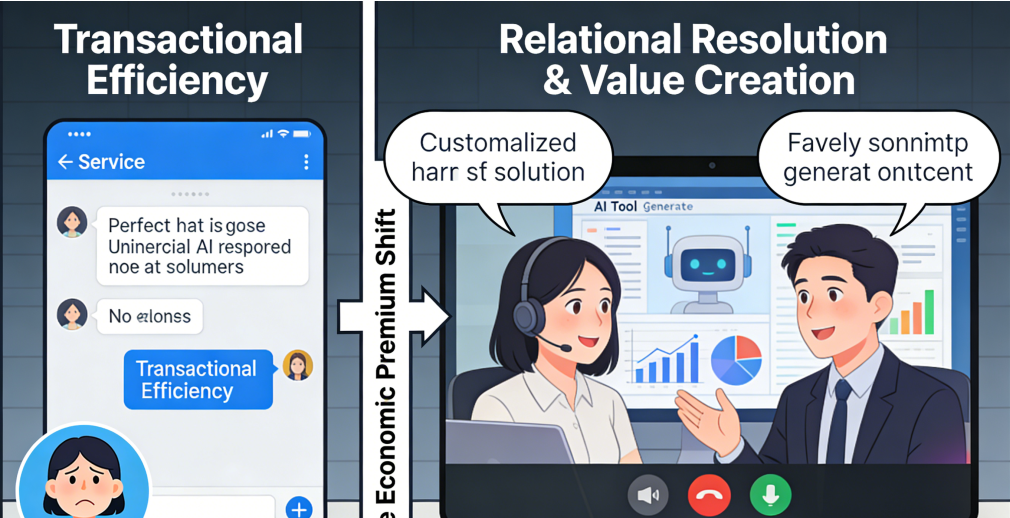
Complementing contextual judgment is the rising economic premium on complex human communication and relational labor. An AI can generate a service script or draft a standard email, but it cannot navigate a fraught conversation with a distressed client, build authentic trust within a team, inspire colleagues through a period of uncertainty, or mediate a conflict with cultural sensitivity. These tasks require a sophisticated synthesis of empathy, emotional regulation, and theory of mind—the ability to infer and adapt to the mental states of others. As routine informational transactions are automated, the remaining points of human contact in commerce and services become disproportionately weighted toward complex, high-stakes interpersonal dynamics. The economic value shifts from the transaction itself to the quality of the relational substrate in which it is embedded. A wealth manager is no longer paid just to execute trades (easily automated), but to provide counsel that understands a client’s life goals, fears, and behavioral biases—a deeply relational act.
This economic reordering is vividly reflected in wage data and labor market polarization. Research consistently shows that employment and wage growth are strongest at both the very high and very low ends of the skill spectrum, while stagnating in the middle. This “hollowing out” is directly linked to automation’s reach. Middle-skill jobs often involved structured, codifiable tasks (e.g., clerical work, certain manufacturing roles). High-skill jobs that are growing, however, are rich in the abstract, human-centric skills the machines lack. Economists refer to these as non-routine cognitive and interpersonal tasks. The premium for these skills is not a temporary market fluctuation; it is a structural adjustment to a technologically mature environment. A software engineer’s value lies increasingly not in merely writing code (a task itself subject to AI assistance), but in defining the ambiguous problem, making architectural trade-offs under uncertainty, and collaborating across disciplines—all skills of judgment and communication.
The implications for education, training, and corporate strategy are profound. An education system optimized for the 20th century, focused on the efficient transfer of standardized knowledge and procedural compliance, is preparing students for the very roles most susceptible to automation. The future demands a radical pedagogical pivot toward the implicit. This means prioritizing experiential learning, case-based reasoning, interdisciplinary collaboration, and the deliberate cultivation of empathy and ethical reasoning. It values philosophy, the arts, and sociology not as luxuries, but as critical training grounds for nuanced human understanding.
For businesses, the imperative is to stop viewing technology and humanity as a simple substitution and start architecting for symbiotic augmentation. The highest-productivity systems will be those that strategically pair algorithmic precision with human wisdom. This requires investing not just in new software, but in fostering cultures that reward curiosity, psychological safety, and collaborative problem-solving. It means designing roles where humans are the integrators, ethicists, and meaning-makers, overseeing AI outputs, applying judgment to edge cases, and ensuring outcomes align with broader human values and strategic context.
Automation, therefore, is not our replacement, but our mirror. By excelling at what we find tedious, it reflects back to us the inestimable worth of what we find uniquely human. It is forcing a long-overdue reckoning with the full spectrum of human capability, compelling us to recognize that our greatest economic asset in the 21st century may not be our ability to think like computers, but our capacity for all the things computers cannot do: to care, to understand context, to navigate moral ambiguity, and to connect with one another in ways that build trust and foster innovation. The future of work belongs not to the most automated society, but to the most profoundly human one.




Discuss