What do you truly own? The question, once philosophical, is now a practical line item in our monthly bank statements. A quiet but totalizing transformation has occurred, not in what we buy, but in how we access the very fundamentals of modern life. We have entered the era of “Subscription Everything,” a paradigm where recurring revenue models have escaped their software origins to colonize cars, clothing, groceries, fitness, and even personal grooming. This is not merely a new pricing strategy; it is a fundamental re-architecture of commerce that is systematically trading ownership for access, reshaping corporate power, and redefining consumer sovereignty in ways we are only beginning to understand. The promise is frictionless convenience; the reality is a creeping, low-grade financial commitment that is shifting power decisively toward the platform and the algorithm.
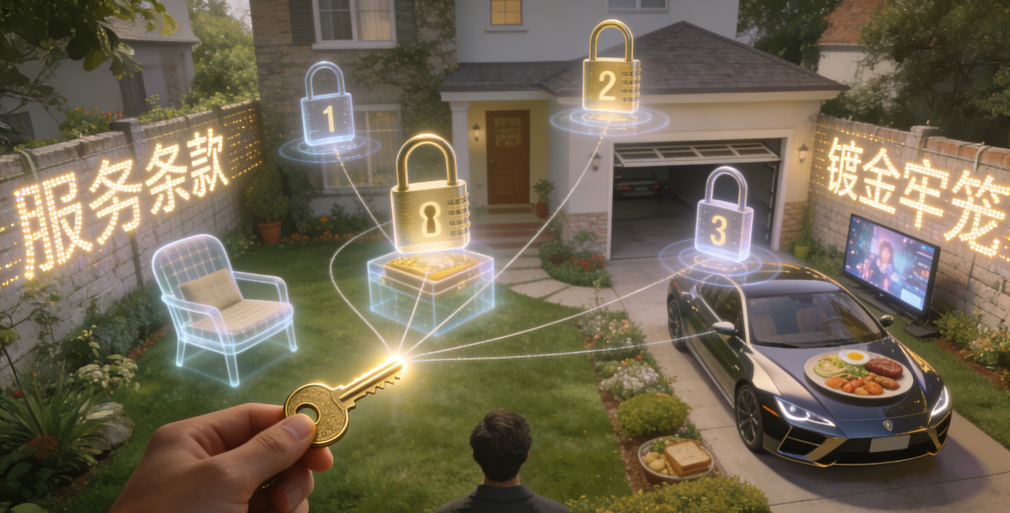
The migration is logical from a corporate perspective. The recurring revenue model is the holy grail of financial predictability. It transforms volatile one-time sales into a smooth, forecastable annuity stream, boosting valuations and pleasing shareholders obsessed with “stickiness.” For venture capital, it is the engine of the “land-and-expand” strategy: a low initial entry point (the monthly fee) that locks in a customer, creating a captive audience for endless upsells and cross-sells. The product is no longer a singular object to be sold, but a continuous service relationship to be managed—and monetized at every digital touchpoint. This logic has proven so powerful that it is being retrofitted onto the most tangible of goods. Your car’s heated seats, your printer’s ink, your home appliance’s most efficient cycle—all are now potential features behind a paywall, transforming durable goods into service-delivery platforms.
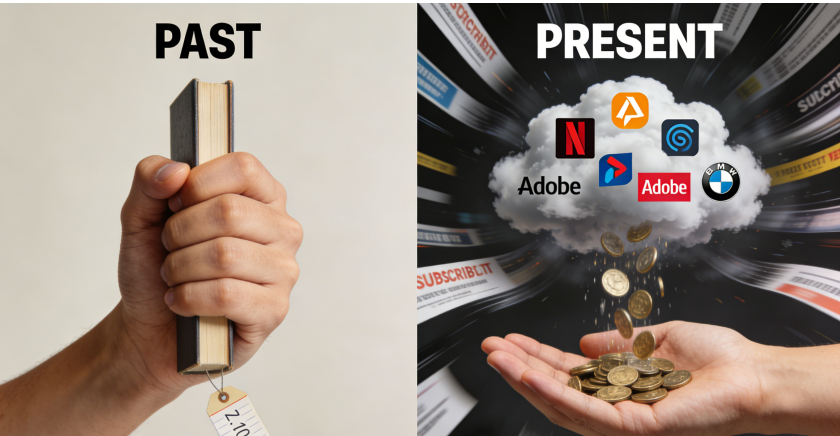
For the consumer, the bargain is seductive but fraught. The front-end benefit is undeniable: lower upfront costs, automatic updates, and the curation of hassle-free convenience. It feels like liberation from the burdens of ownership—maintenance, obsolescence, clutter. Yet, this liberation comes at the cost of financial elasticity and true agency. The cumulative effect of dozens of small, auto-renewing subscriptions creates a “subscription sprawl”—a diffuse but heavy fixed cost architecture that quietly consumes disposable income. The psychological pain of a single large purchase is replaced by the numbness of automated micro-charges, making spending less visible and more persistent. Cancellation, deliberately complicated by “dark patterns” in user interface design, becomes a chore. The result is a consumer who is perpetually renting their own lifestyle, unable to fully opt out without experiencing a digital or functional degradation of their daily life.
This shift is corroding the traditional concept of a market. When access is contingent on continuous payment, the fundamental power dynamics change. The company is no longer incentivized solely to make a better product you’ll buy once; it is incentivized to design an ecosystem you cannot afford to leave. This creates a new form of “behavioral lock-in” far more potent than technological lock-in. Your data, your preferences, your usage habits, and your social connections become woven into the service. Leaving Spotify or Adobe isn’t just switching a tool; it’s disrupting curated playlists, collaborative documents, and years of algorithmic training. The exit costs are psychological and practical, not just financial.
The most insidious consequence is the rise of the “micro-monopoly.” A traditional monopoly controlled a market for a product. A subscription-driven micro-monopoly controls your access to a function. You may own your smartphone, but Apple or Google controls your access to its core applications through their subscription-laden app stores and services. You may finance your car, but the manufacturer can control which features are active through a subscriber-only software key. This decentralizes monopoly power into dozens of small, essential domains of daily life, each governed by its own terms of service rather than the principles of property law. Competition becomes less about displacing a rival and more about making one’s own walled garden more inescapable. The consumer isn’t choosing between products; they are choosing which feudal lord to pay rent to for which parcel of their digital and physical existence.
Economically, this model privileges rent extraction over innovation. A firm with a captive subscriber base can increase revenue by simply raising prices, adding new fee tiers, or converting previously free features into premium add-ons—all without necessarily improving the core service. The innovation that does occur is often in surveillance and engagement optimization: better algorithms to predict what you’ll pay for, more sophisticated ways to keep you scrolling, and finer-grained data harvesting to personalize the next offer. The race is not to the best product, but to the most indispensable and habit-forming service.
The endpoint of “Subscription Everything” is a world of permanent tenancy. We will live in homes streamed by landlords, drive features rented from automakers, and consume entertainment and software licensed by the month. Our financial lives will be a web of passive outflows, and our autonomy will be bounded by the permissions of our service providers. The promise of convenience masks a stark transfer of power: from the individual who owns and decides, to the corporation that grants conditional access. To reclaim agency, consumers must begin to audit their own digital and physical leases, asking not just “What does this cost?” but “What do I surrender, and what am I truly prevented from owning, in this perpetual bargain?” The subscription model isn’t just selling us services; it is quietly selling us out of the very concept of ownership, one automated payment at a time.




Discuss